Welcome to our IAP2 Visual Engagement Award Application Gallery Page
The Community Health Boards (CHBs) are a committed group of volunteers who are working together to improve the health of their communities. CHBs serve a vital role in the well-being of their communities, helping to support many community-based projects and partnerships. This includes providing grants to community-based groups to support projects focused on health promotion and the social determinants of health.
Sharing Outcomes of Previous Community Health Plans to Demonstrate Action and Build Trust Prior to Engaging
We recognized the importance of demonstrating to community that prior engagement when creating our previous 2019-2024 Community Health Plan created local action and results so they would feel confident their participation in upcoming engagement would shape future priorities and actions within the new 2025-2029 Community Health Plan. This was done using a variety of reports:
Annual Report to Communities - Every CHB in the province produces a bi-fold annual report that provides a snapshot of the work they are doing including key partnerships, advocacy, events, and local projects they have supported through the administration of CHB Wellness Funds.
Zone Reports Back to Community - A document that shared outcomes from the previous 2019-2024 Community Zone Health Plan.
Accomplishment Report - A compilation of accomplishments from CHBs throughout the province that demonstrates action on the priorities identified in the previous Community Health Plan.
Preparing Staff & Volunteers for Engagement
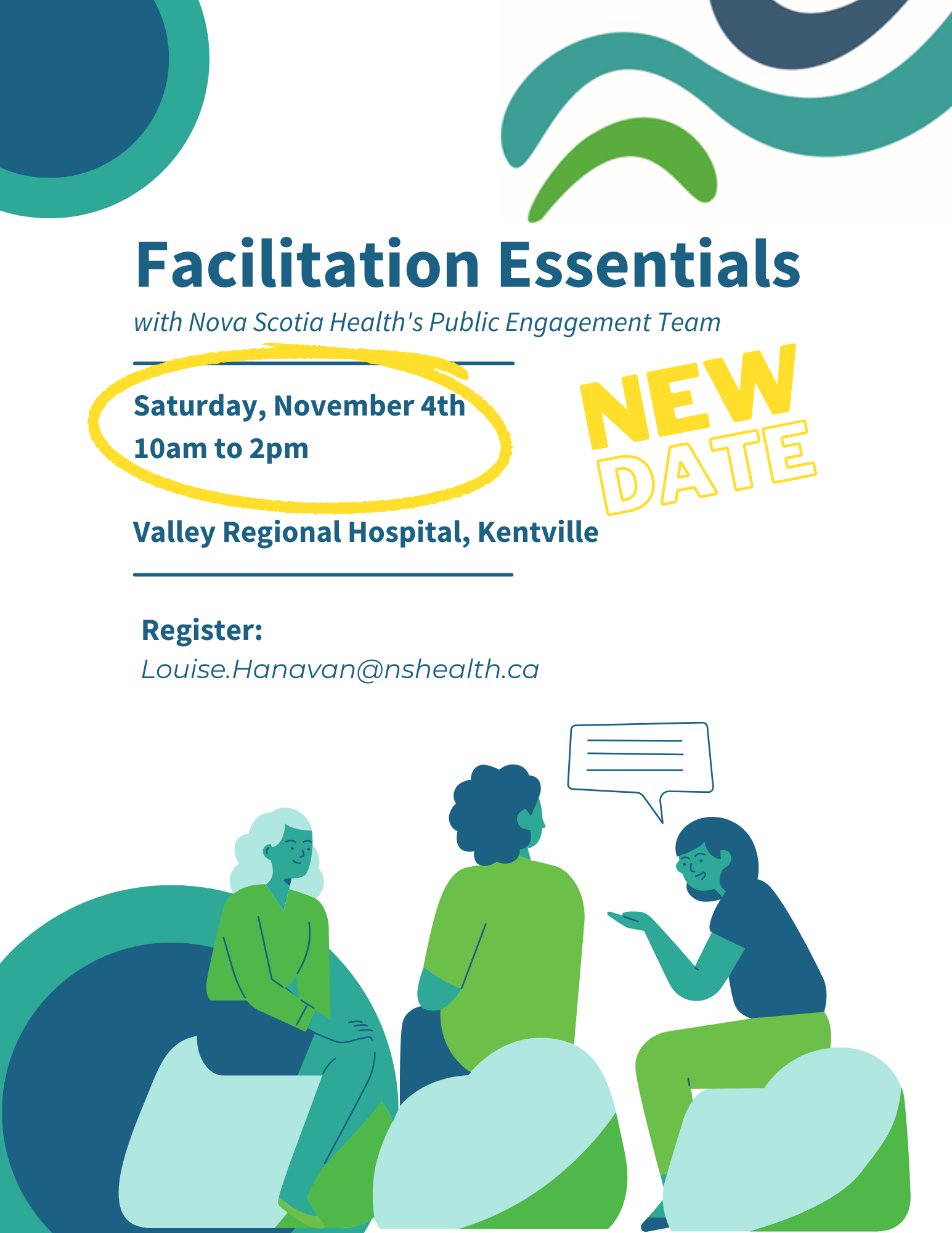
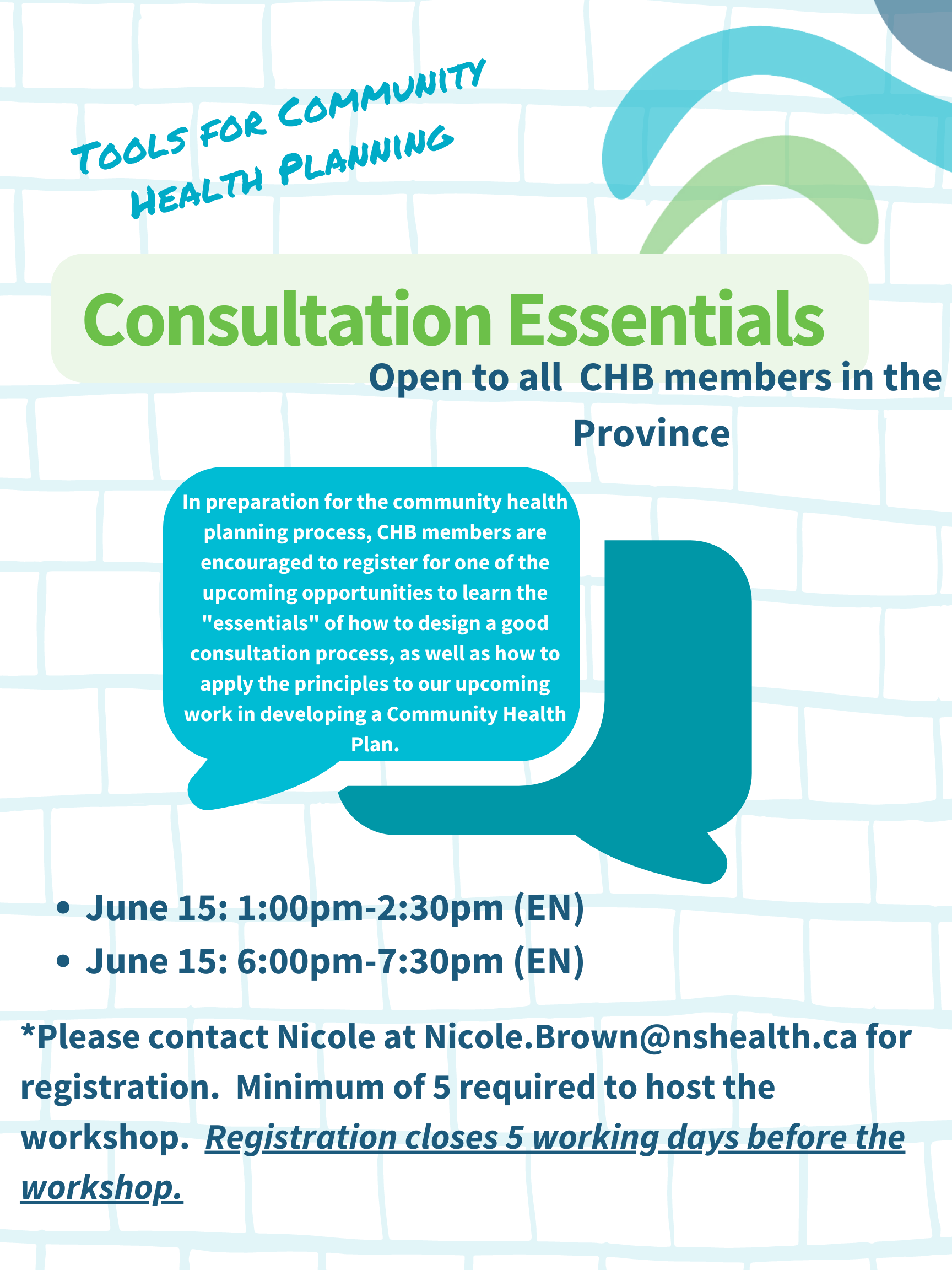
Prior to engaging with community for the 2025-2029 Community Health Plan, many CHB Coordinators completed the IAP2 Foundations in Public Participation Certificate and our volunteer community health board members received training in Facilitation Essentials and Consultation Essentials.
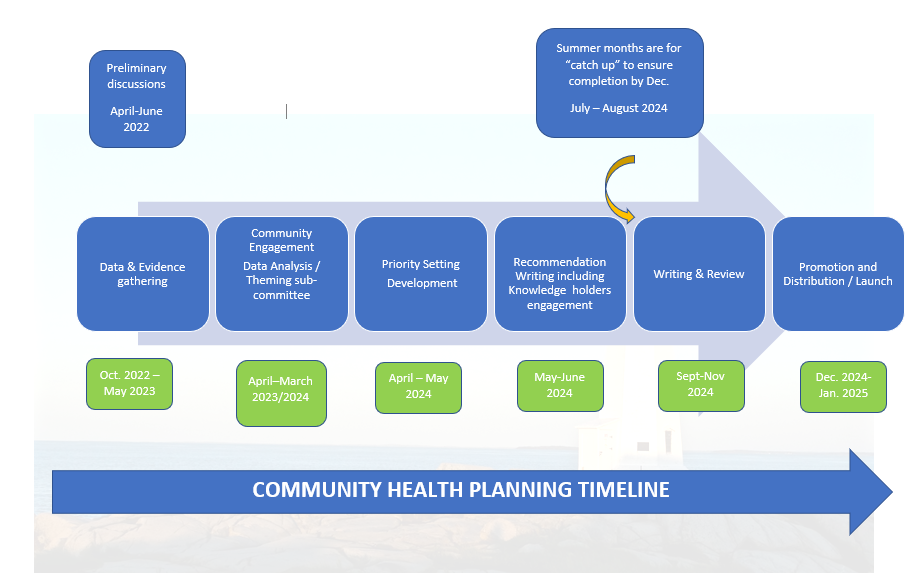
Our Community Health Planning Timeline
Data Review in Preparation of Engagement
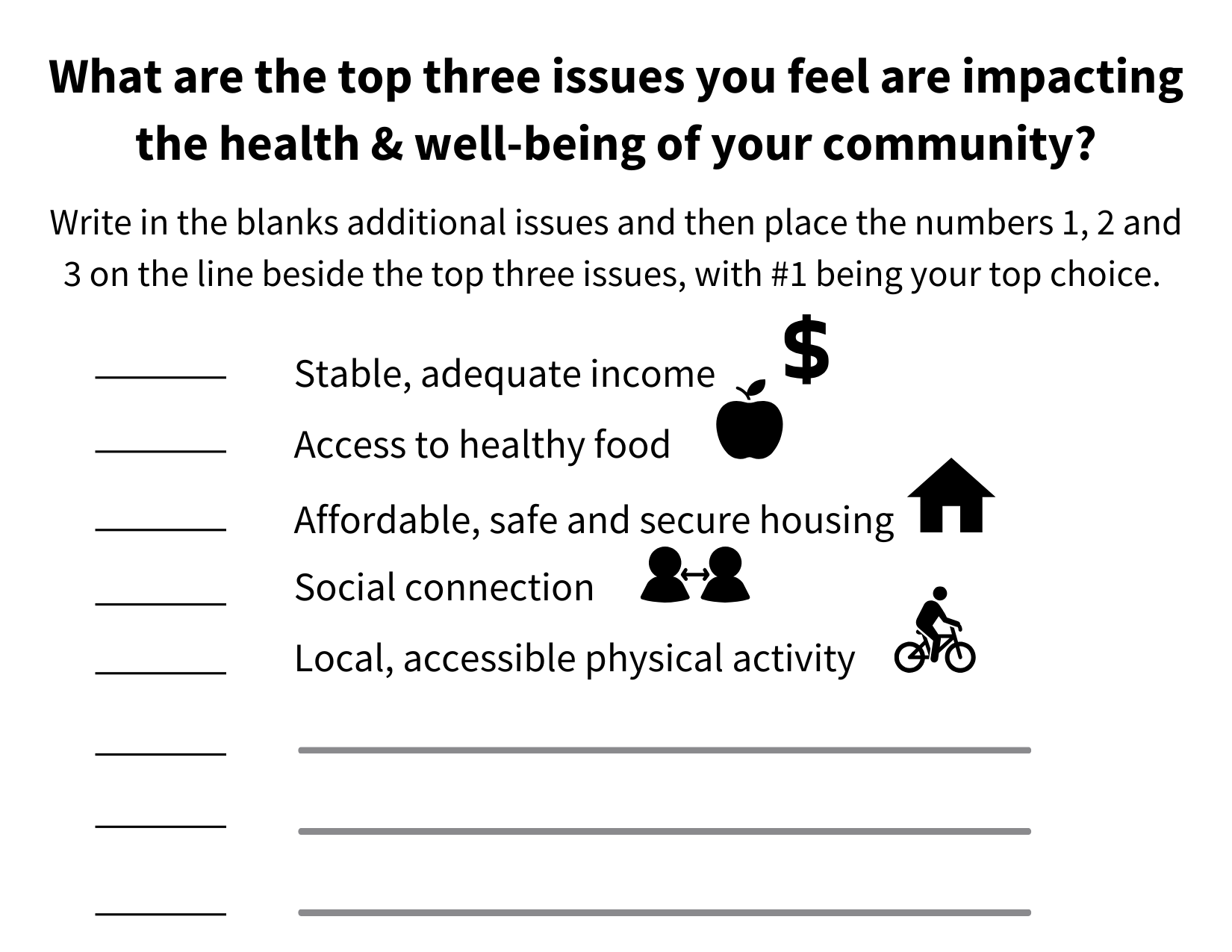
Data sheets on the previous plan priorities of Active Communities, Food Insecurity, Housing, Income, and Social Connection were prepared for the Health Planning Committees in each of the four zones. These topics were chosen based on an analysis of the previous community health plans, with the goal of this round of engagement taking a deeper dive into those topics. Demographic profiles were also prepared for each zone as well as “Connecting the Dots” visual knowledge translation tools about Basic Income, Food Security, Housing, Mental Health, Transportation, and Poverty that were turned into printable documents as well as standalone banners. Relevant reports produced by other organizations were also included in the data review and all of this information combined was used to identify what information and stories were missing, and what voices we needed to prioritize in our engagement process. This data review was also key in identifying the questions that would be asked through our broad province-wide engagement initiatives to explore the findings of the previous engagement in a deeper, solution-focussed manner.
Broad Engagement through Provincial Survey
CHBs throughout the province used the Engage4Health platform to conduct online surveys in both English and French to gather feedback from the general public.
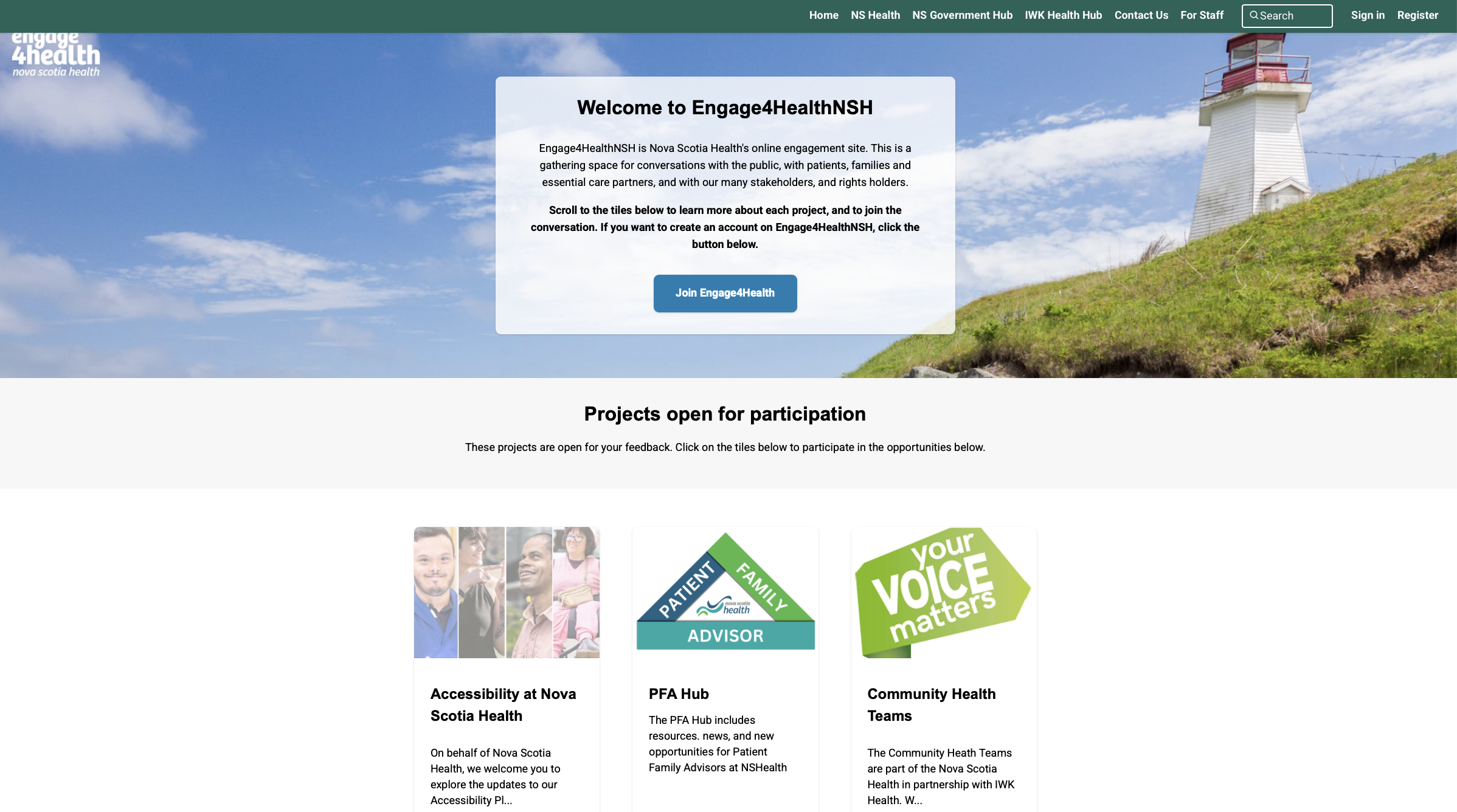
Community Health Plan Engagement Explainer Video
This explainer video was within the Engage4Health portal before the survey questions and was also shown at in-person engagement sessions throughout the province.
While the online survey was open to the general public, partnerships internal and external to Nova Scotia Health were used to support engagement and participation from those voices often under-represented in these types of surveys.
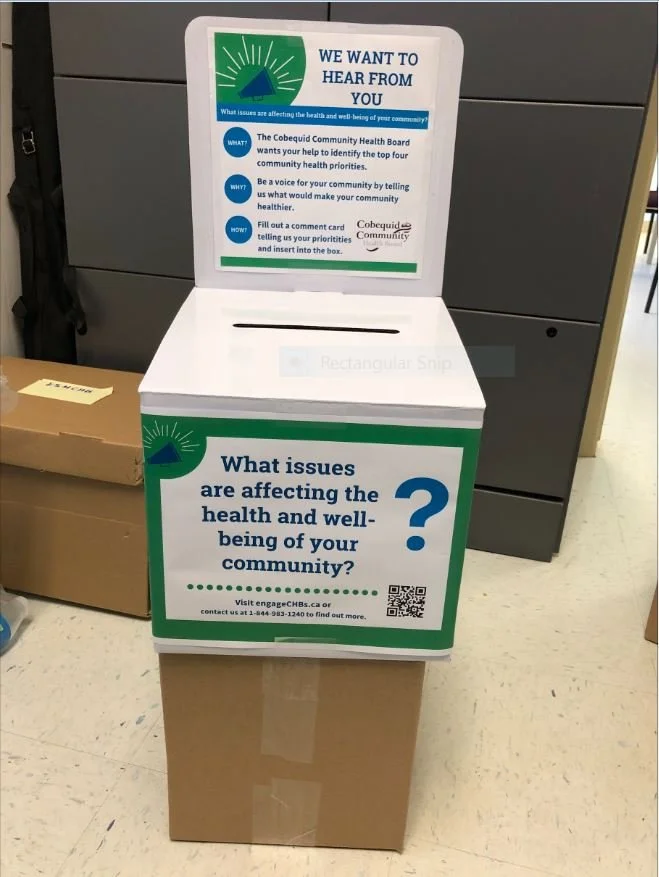
Postcards at Pop-Ups and In-Person Sessions
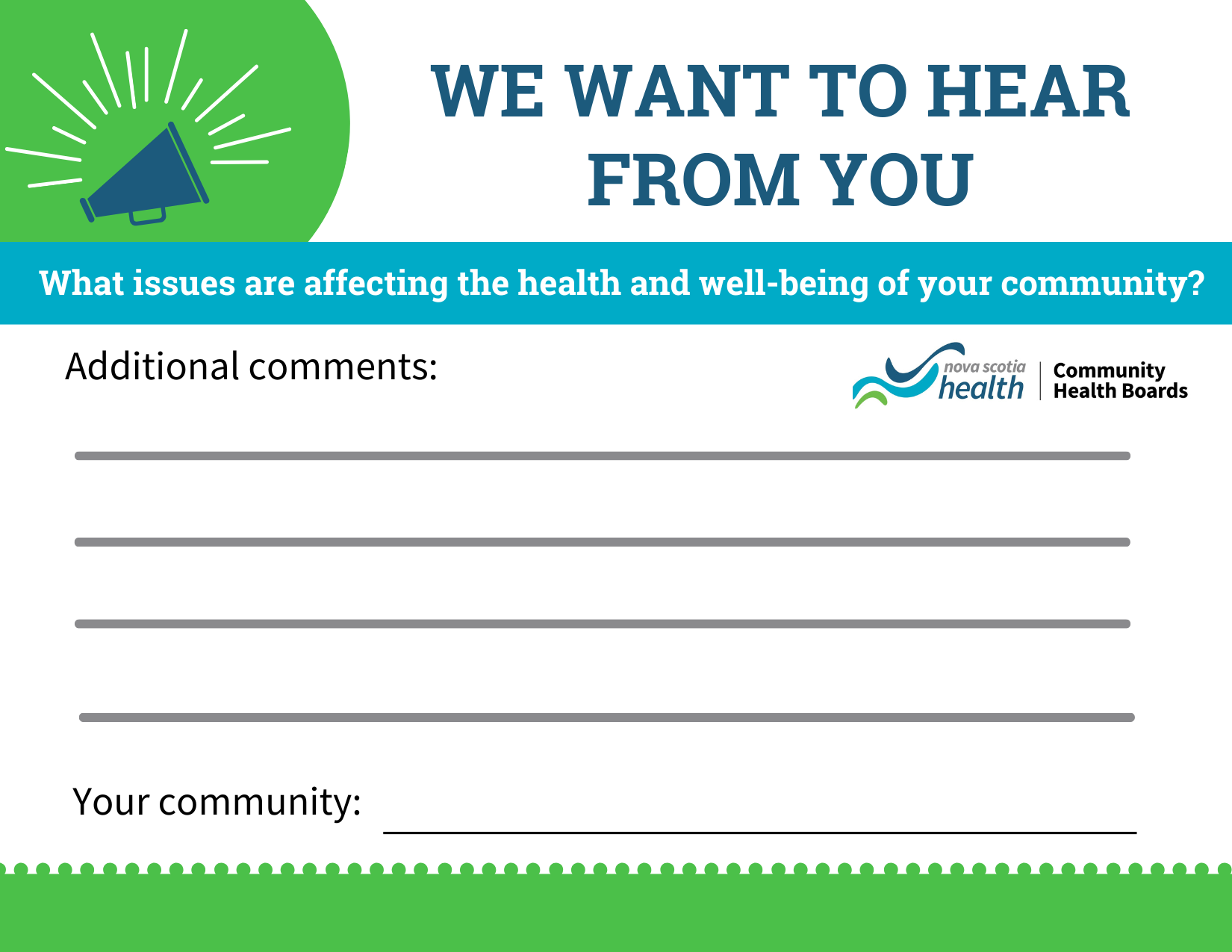
Postcards were designed in both English and French to engage with community at in-person events and pop-ups.
Zone-Specific Engagement
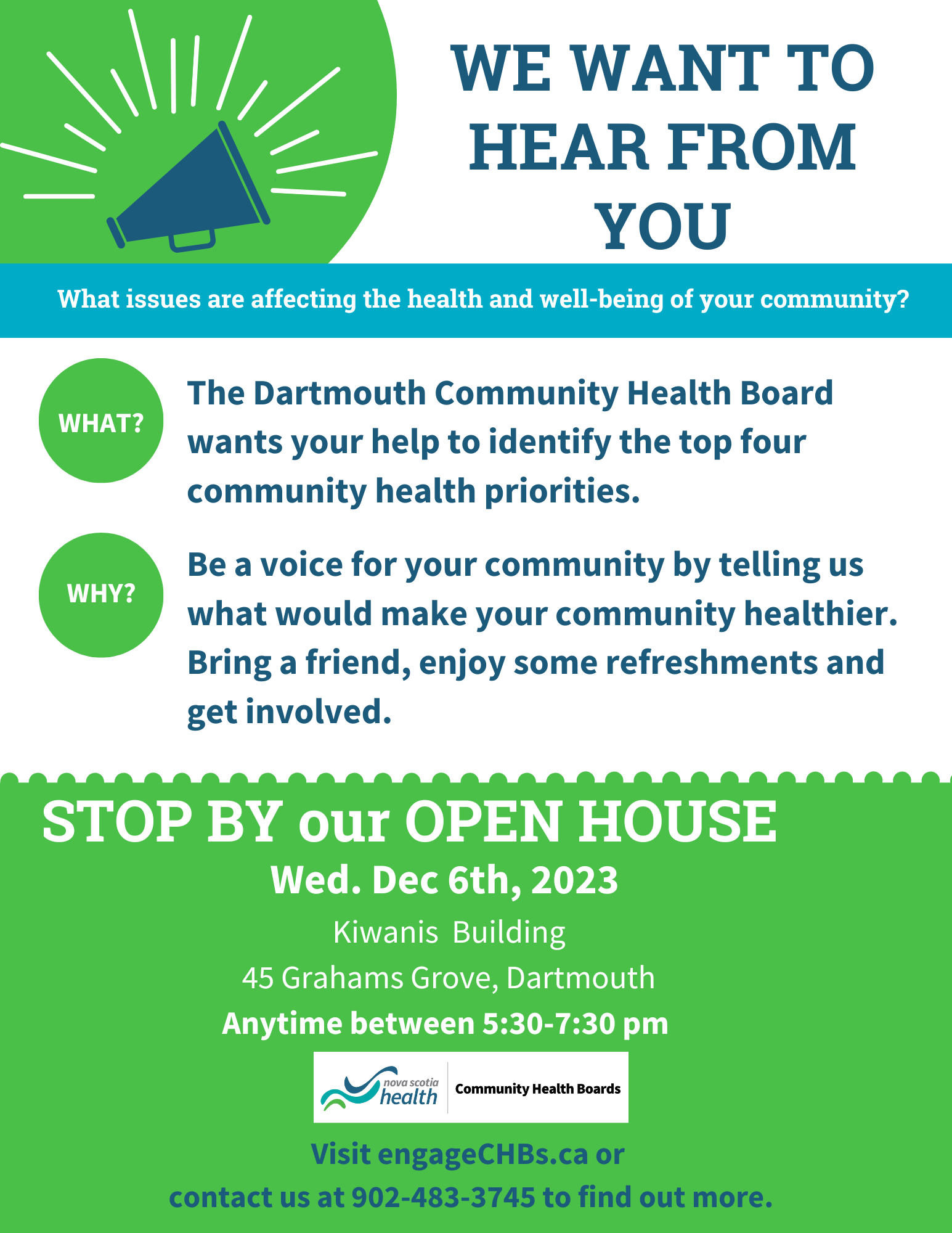
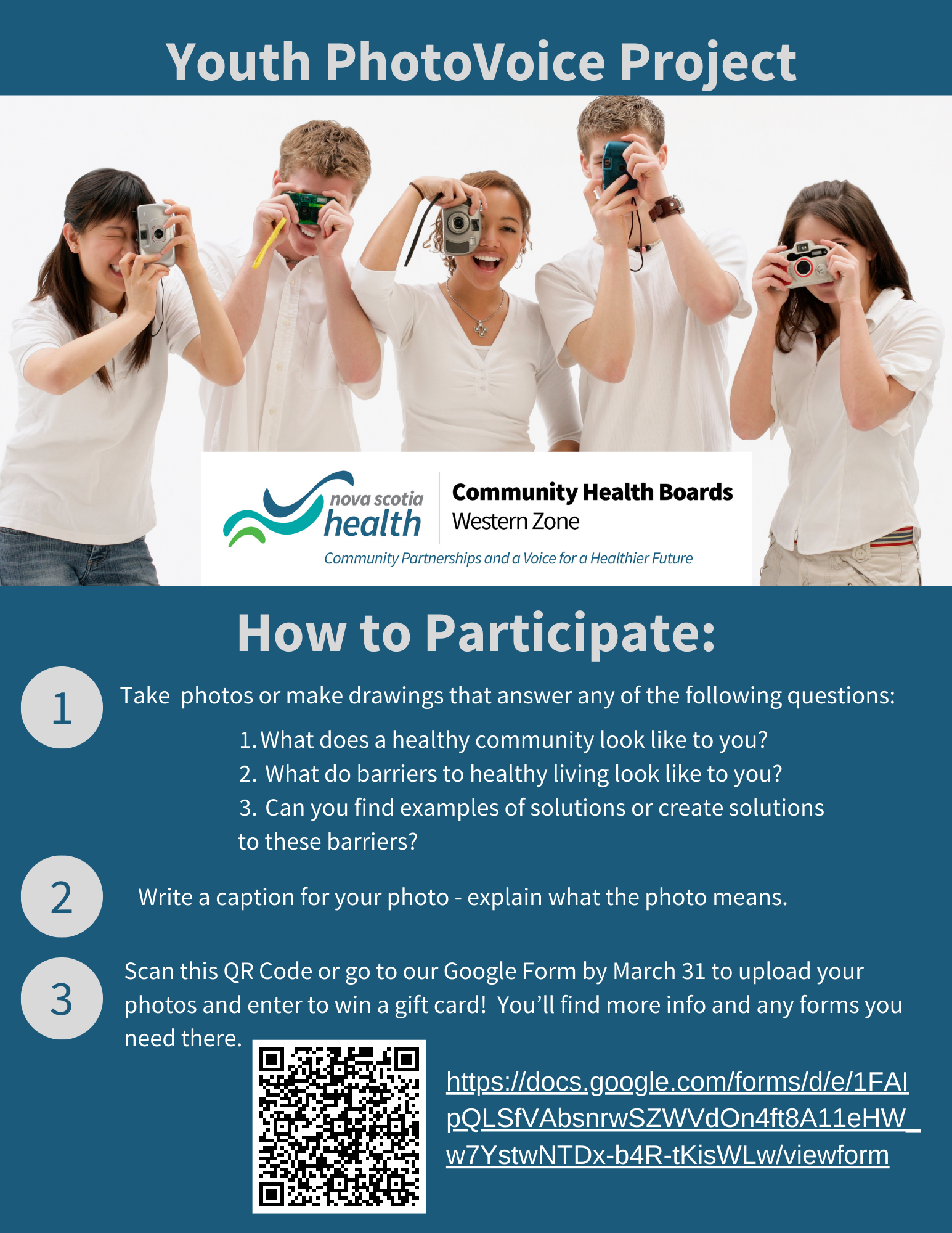
In addition to the broad, province-wide survey and engagement at pop-ups and community events using postcards, each of the four zones within Nova Scotia Health developed engagement plans unique to their own local communities.
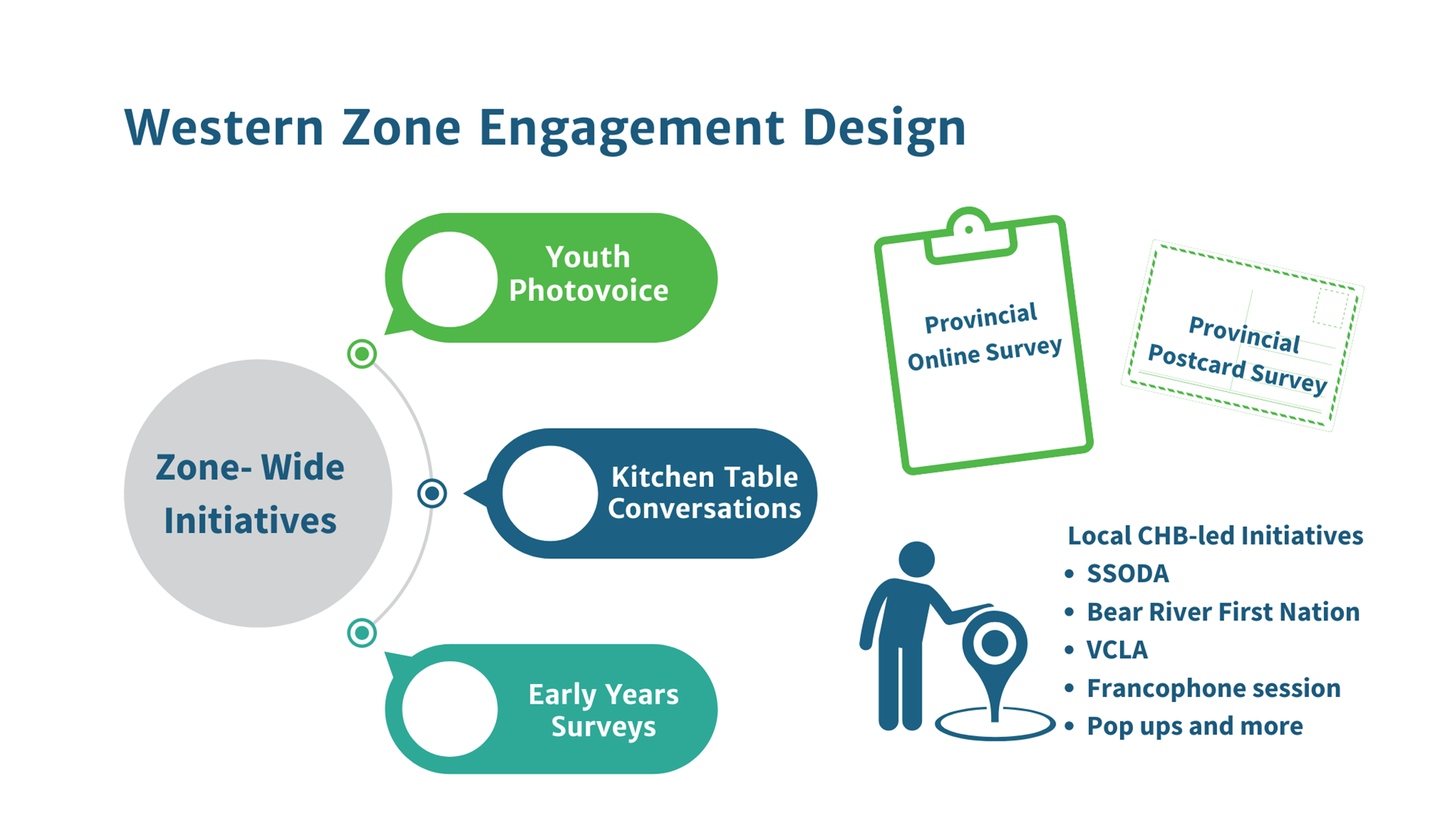
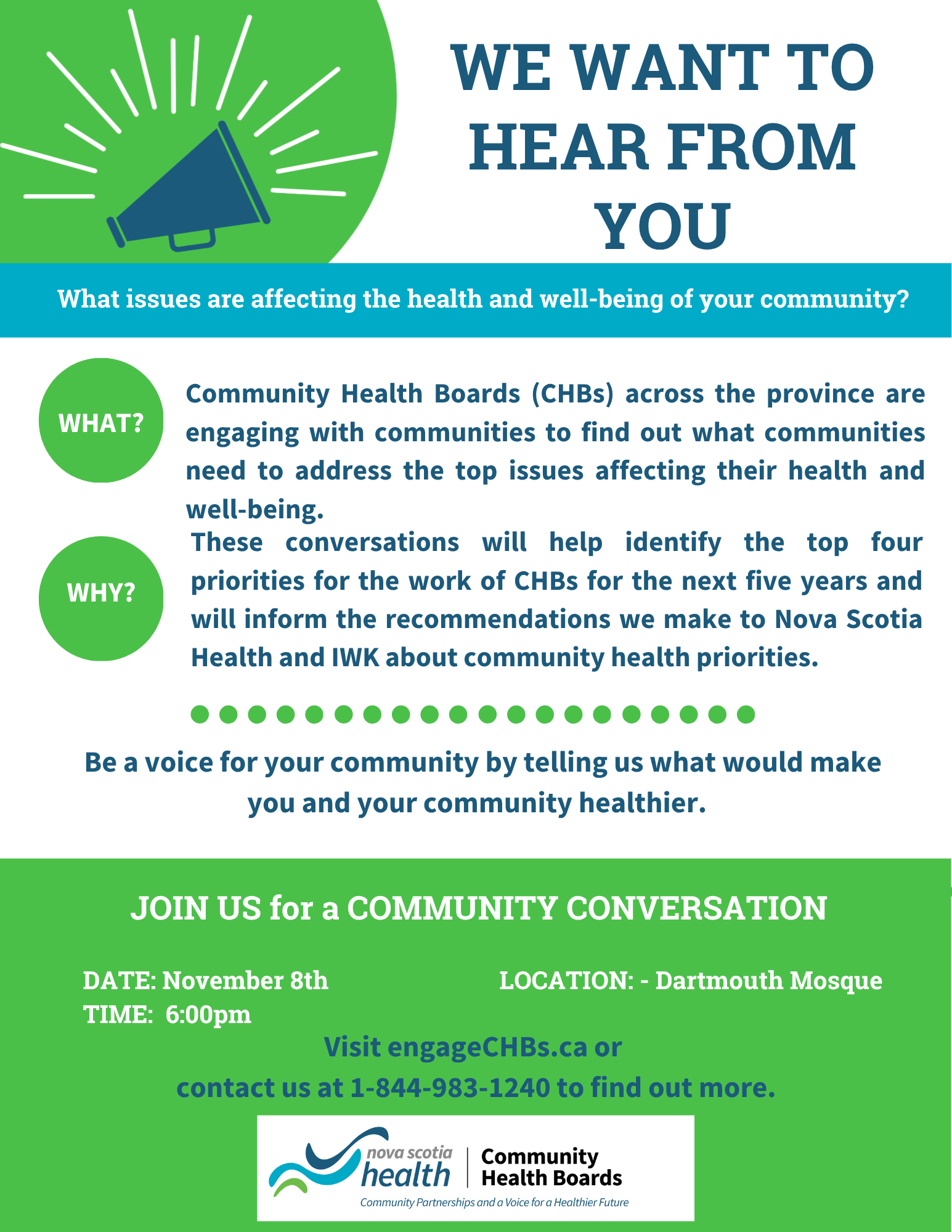
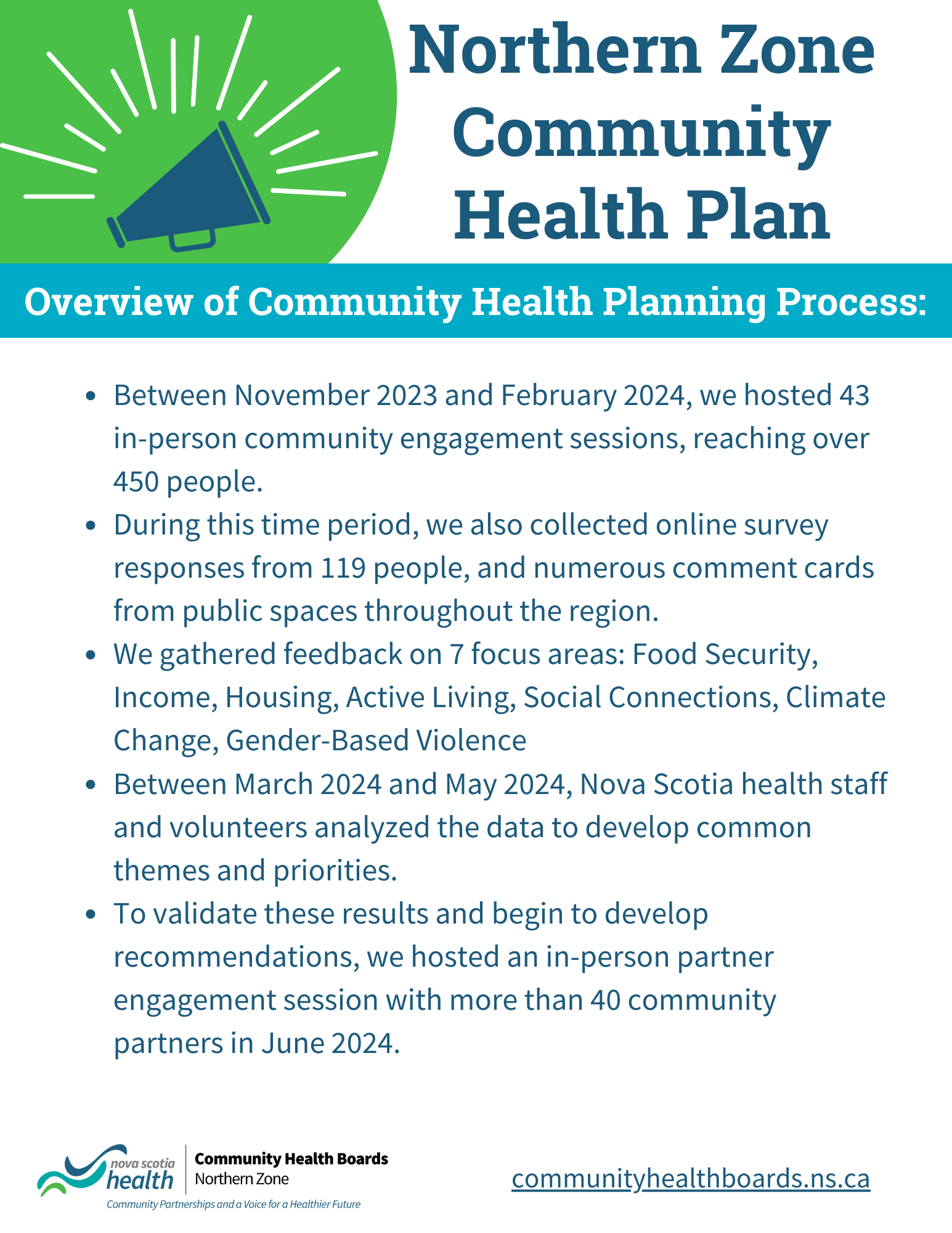
Zone plans were often very focused on capturing the voices of those who historically were left out of engagement initiatives and priority groups identified within our Health Equity Framework. Working with community leaders within the African Nova Scotian Community to host Kitchen Table Conversations in Western Zone is one example of this work. Another example, from Northern Zone, demonstrates how an engagement session with Corridor Community Options for Adults (CCOA) was adapted to be accessible. This thank-you note from a participant validates appreciation for being included.
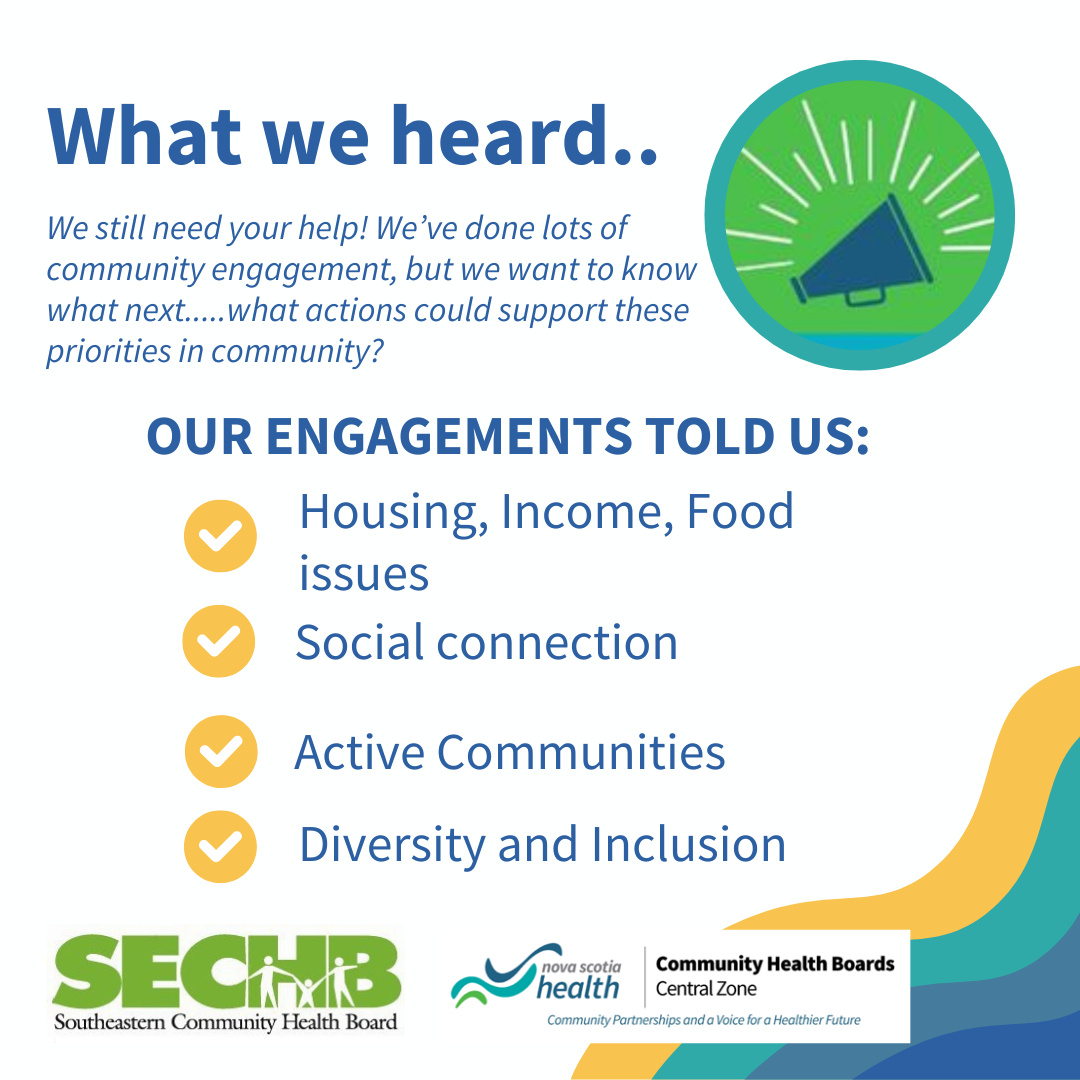
What We Heard
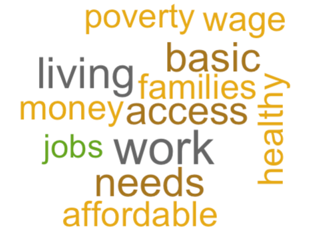
CHBs engaged Nova Scotians from November 2023 to early March 2024 on issues like poverty, food security, housing, active living, and social connection. At least 150 in-person sessions were held, with 2391 attendees, 1700 comment cards, and input from 2652 online participants, totaling input from more than 6700 people. From this feedback, common themes began to emerge.
CHBs were committed to sharing back to participants, communities, and partners what was heard through the engagement process and further engage with community and content area knowledge keepers to validate what was heard, identify best practices, and identify actions to support these emerging priorities.
Drafting Priorities for the Community Health Plan
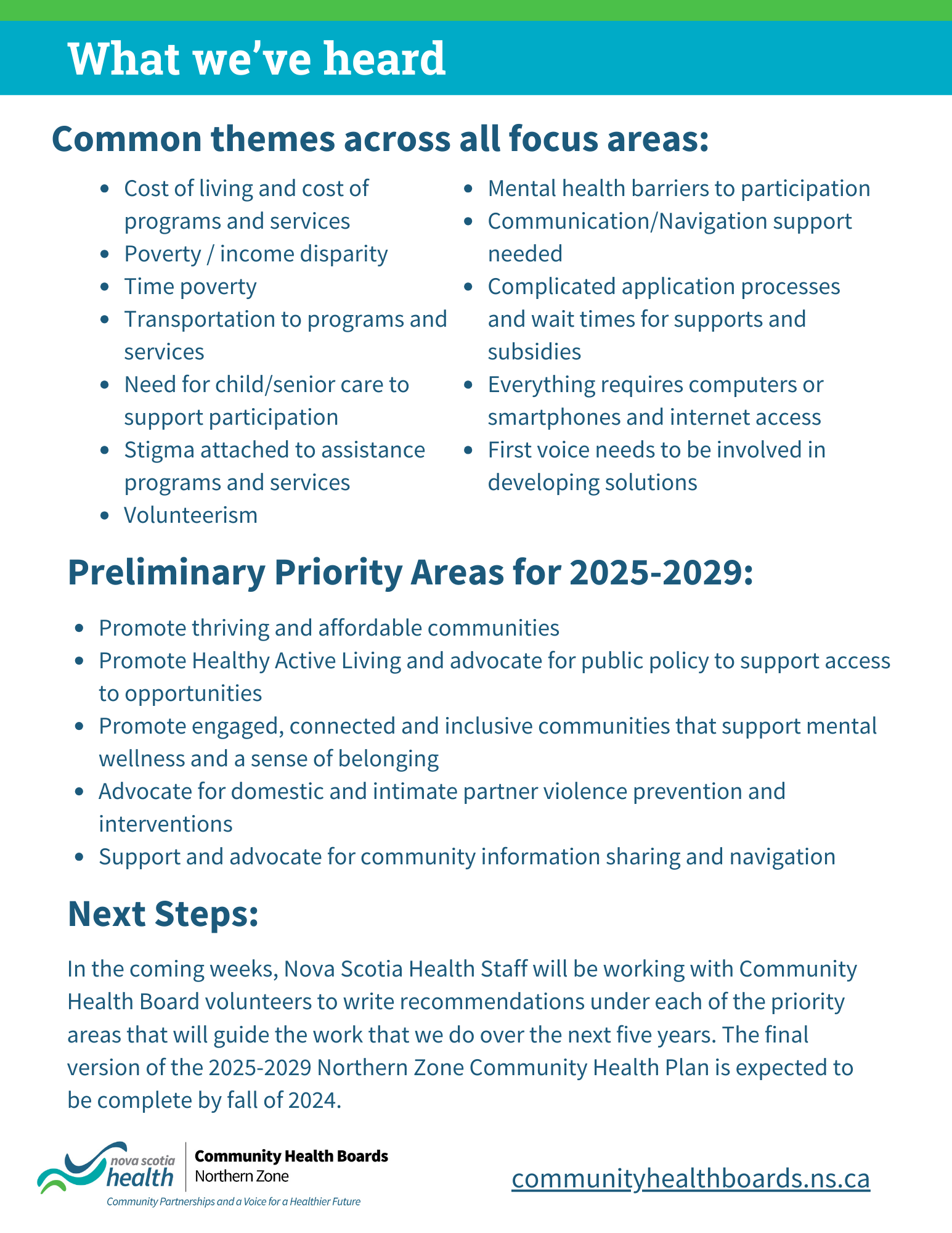
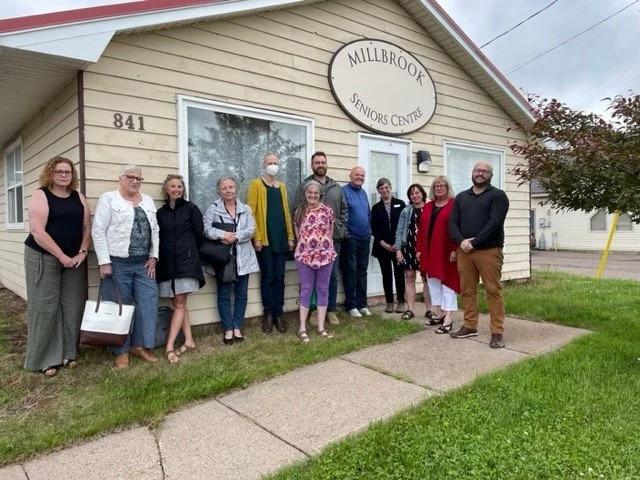
Zone community health planning teams met to draft and then finalize the health priorities for the 2025-2029 Community Health Plan.

Eastern Zone Health Planning Team

Zone Community Health Plans & Provincial Synopsis
Community Health Plans were produced for each of the four zones using similar templates but allowing for flexibility. They can be found here: Eastern Zone, Northern Zone, Central Zone, Western Zone.
Shorter two-page health plan summaries to share with communities were created: Eastern Zone Summary, Northern Zone Summary, Western Zone Summary. In Central Zone, two-page summaries focused on each of their health priorities were created: Active Communities, Communication, Food Security, Housing, Income, Social Connection, Transportation.
Zone Coordinators and managers then met to identify common themes throughout the province that were presented in a Provincial Synopsis Report and a presentation by the Provincial CHB Council of Chairs to senior leadership at Nova Scotia Health, IWK Health Centre, and N.S. Department of Health & Wellness. Multiple versions of this presentation have been adapted for various internal and external audiences, including public health partners, provincial government and non-government agencies, local community organizations - and to the partners and communities we engaged with to create these plans.
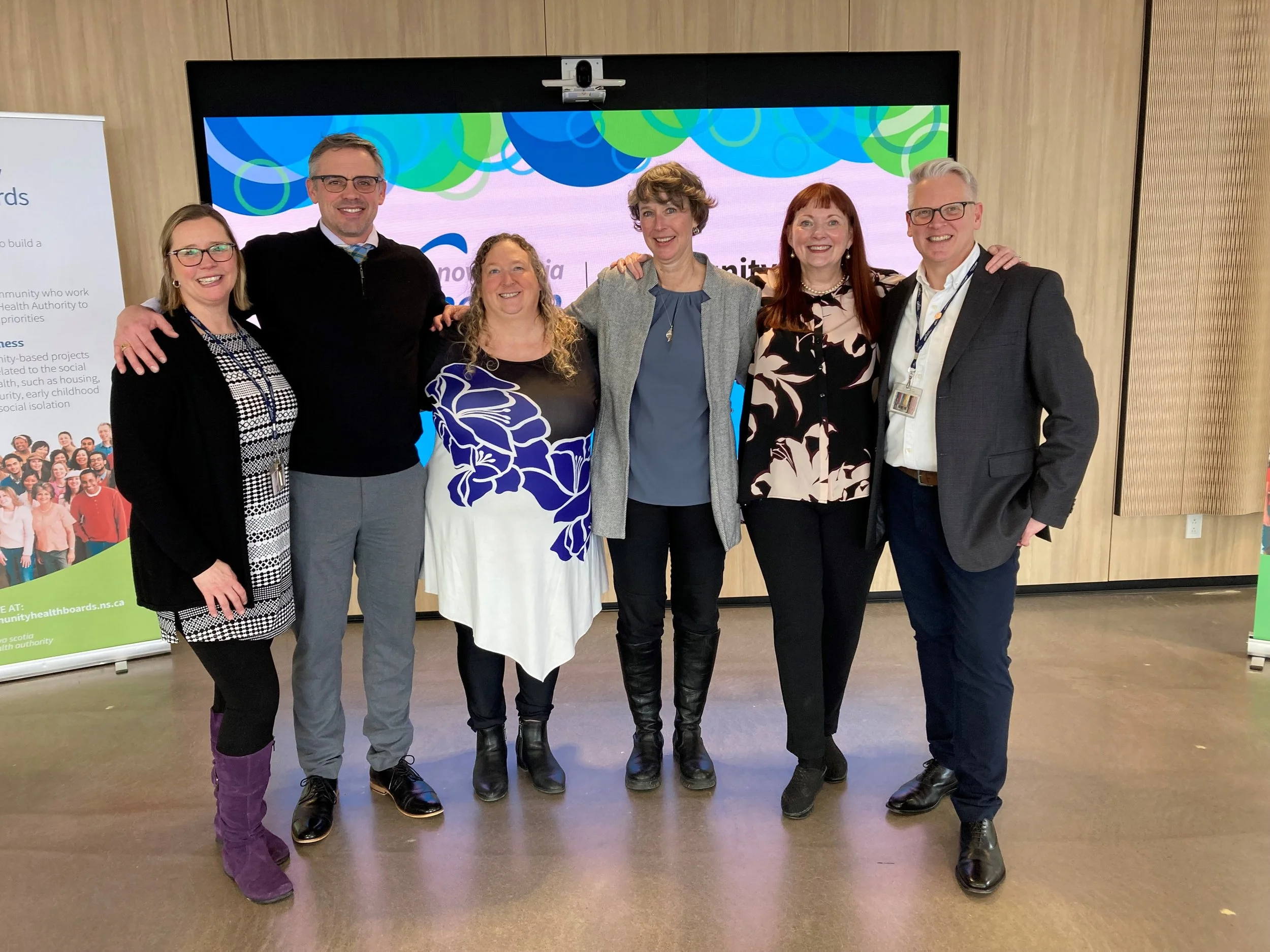
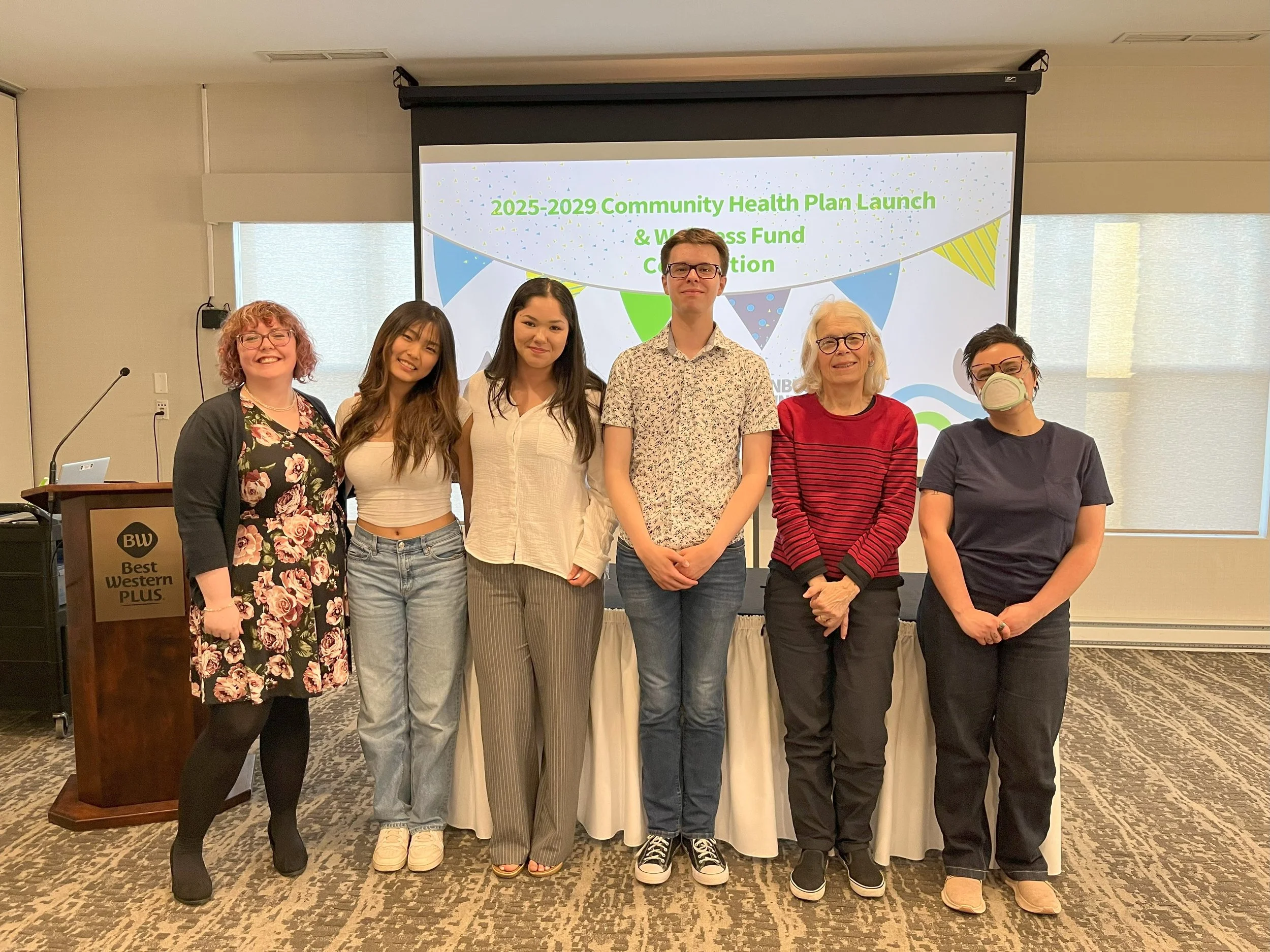
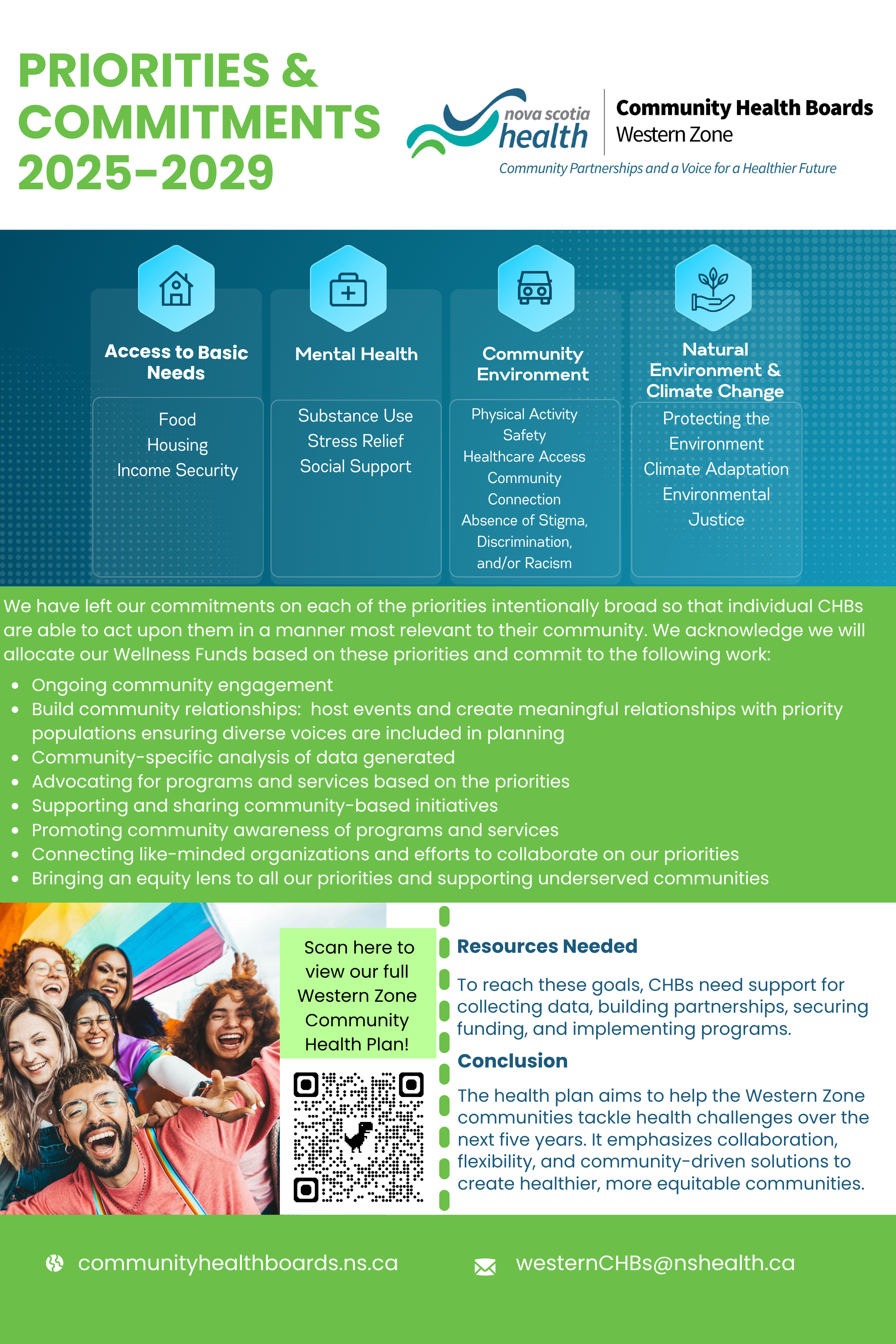
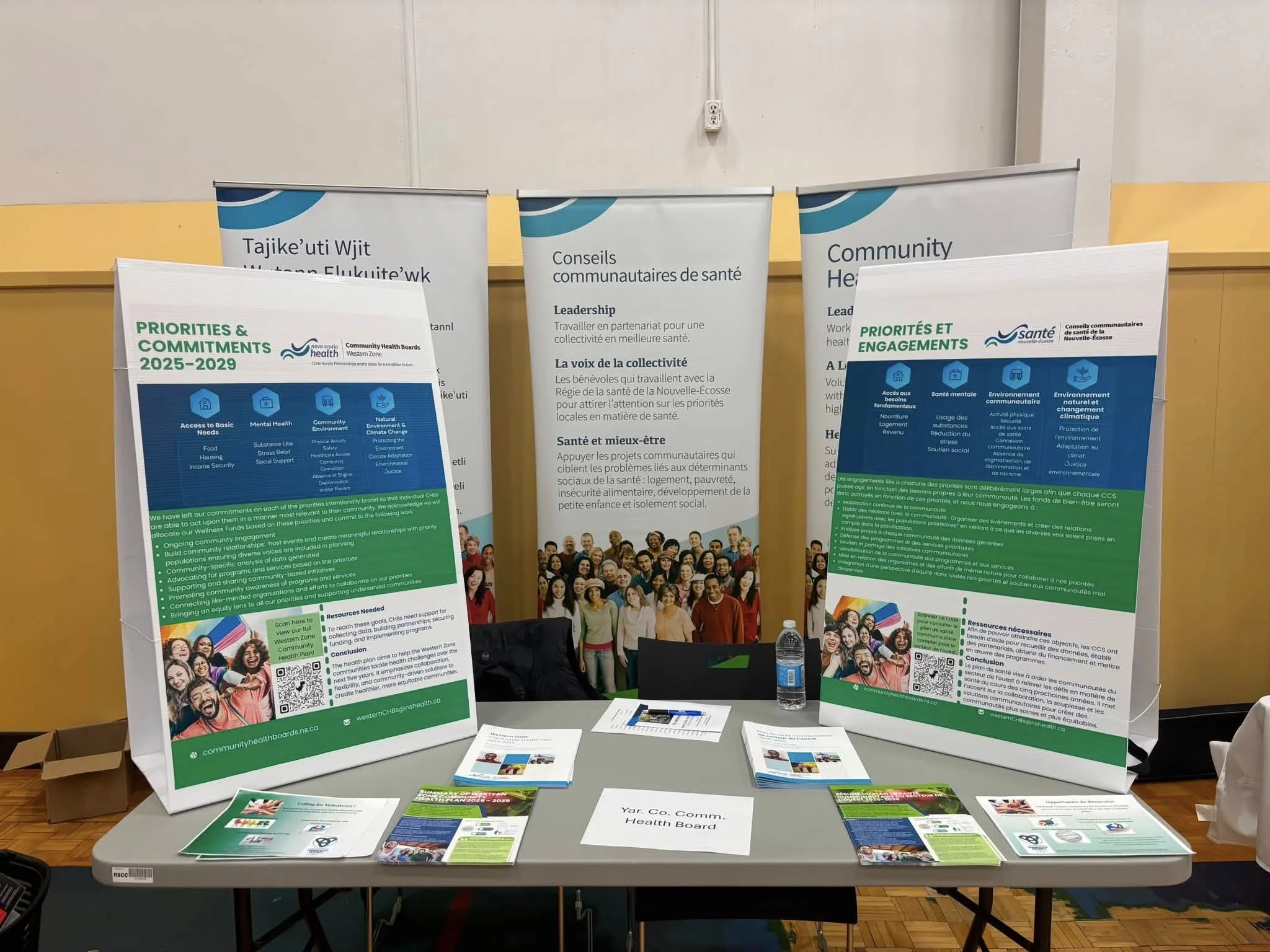
Additional resources were created to be used by CHBs to easily share key points of the Community Health Plan when participating in community events such as table-top displays in Western Zone.
Translated Materials
Our province-wide initiatives, such as the Engage for Health provincial survey and postcards for pop-ups and events, were both available to be completed in French, allowing respondents to provide feedback in their first language.
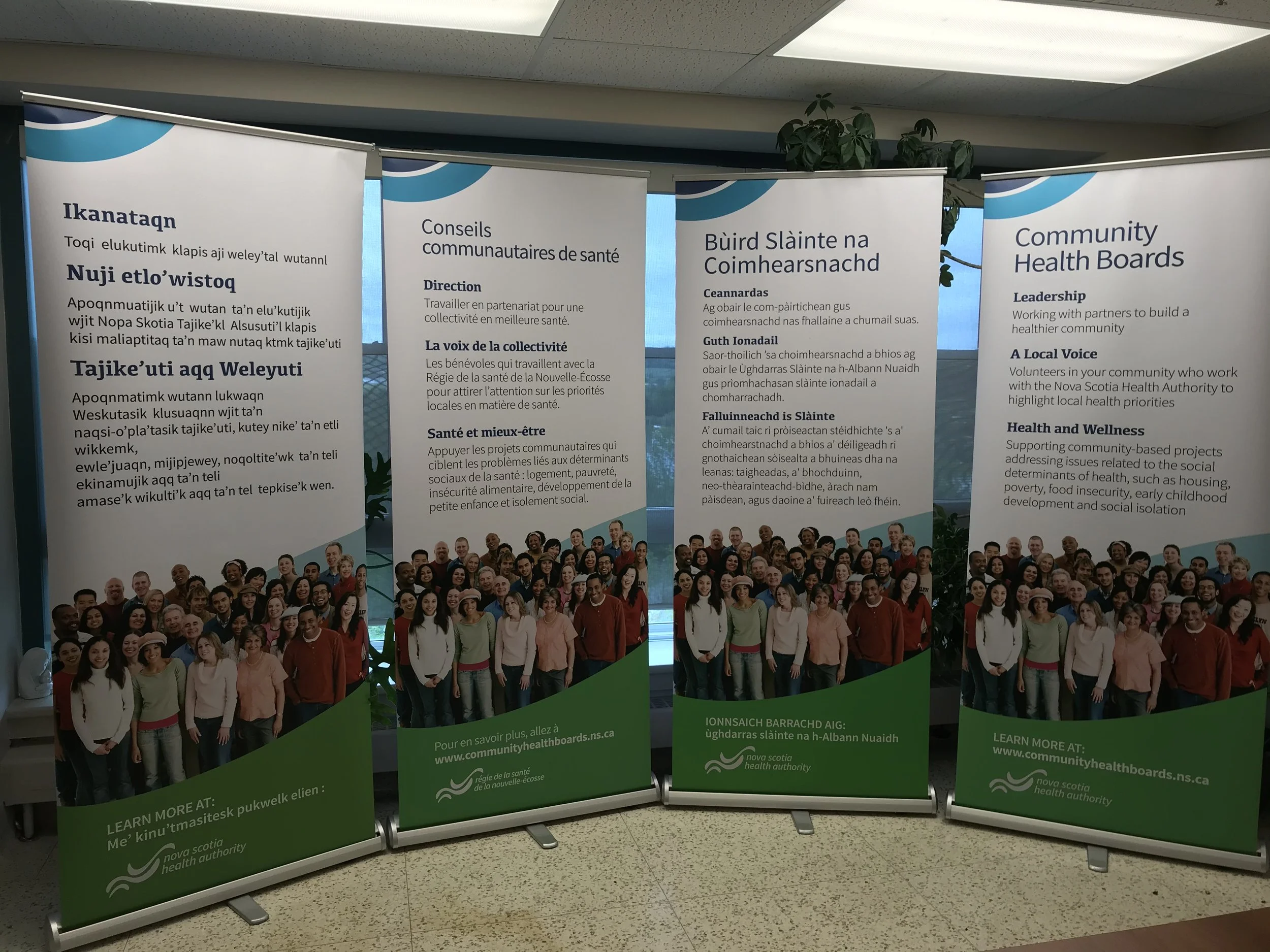
Banners in French, Miq’maw, and Gaelic in addition to English were available for use at events.
We also have French versions of the Provincial Synopsis of the 2025-2029 Community Health Plan, the Community Health Plans for Eastern Zone, Northern Zone, Central Zone, and Western Zone as well as the Provincial Annual Report.
Provincial Community Health Board Conference
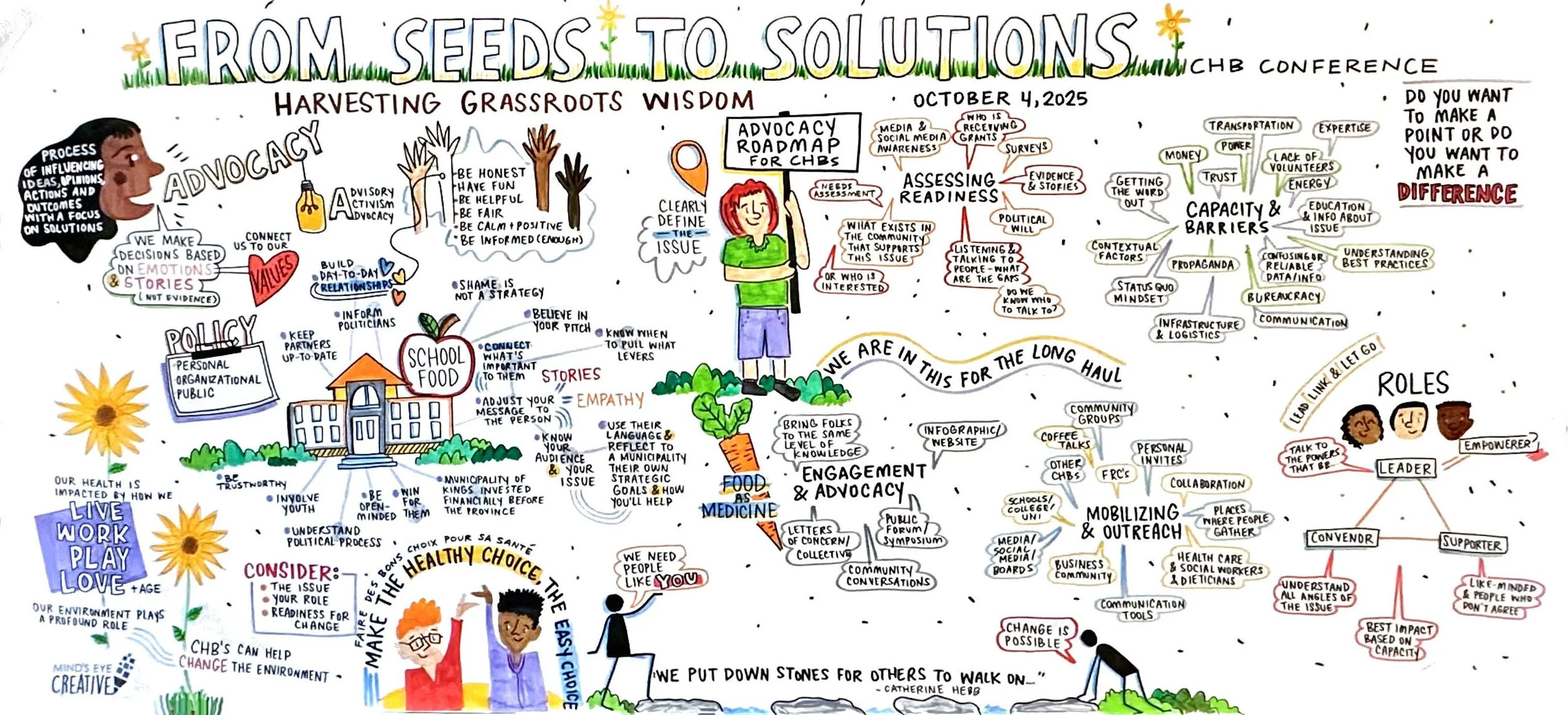
In October 2025, the CHB bi-annual conference was held gathering volunteer CHB members together to dive deeper into the priorities of the community health plan and explore opportunities for collective action. This was captured as a graphic recording to be shared with community.
Social Media Graphics
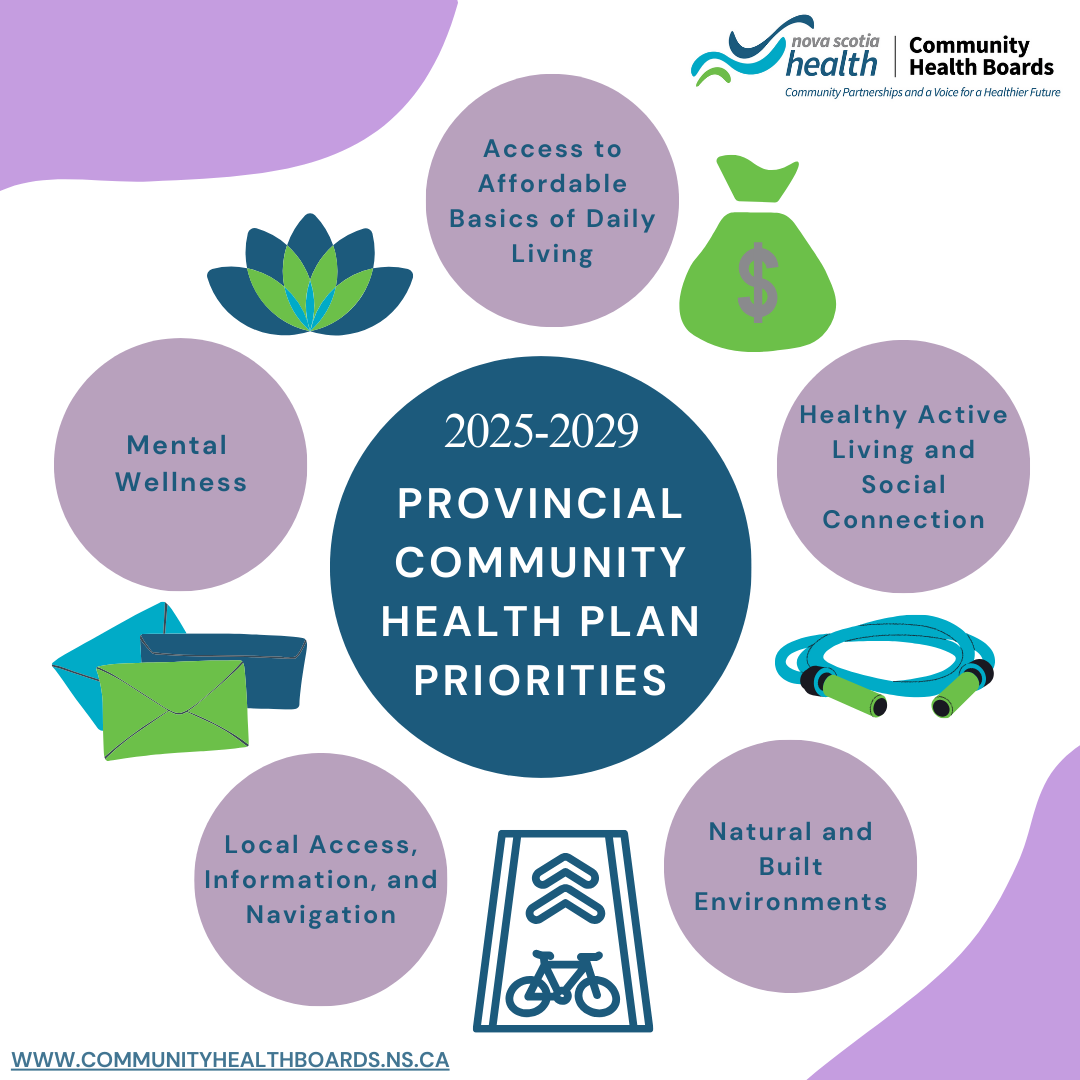
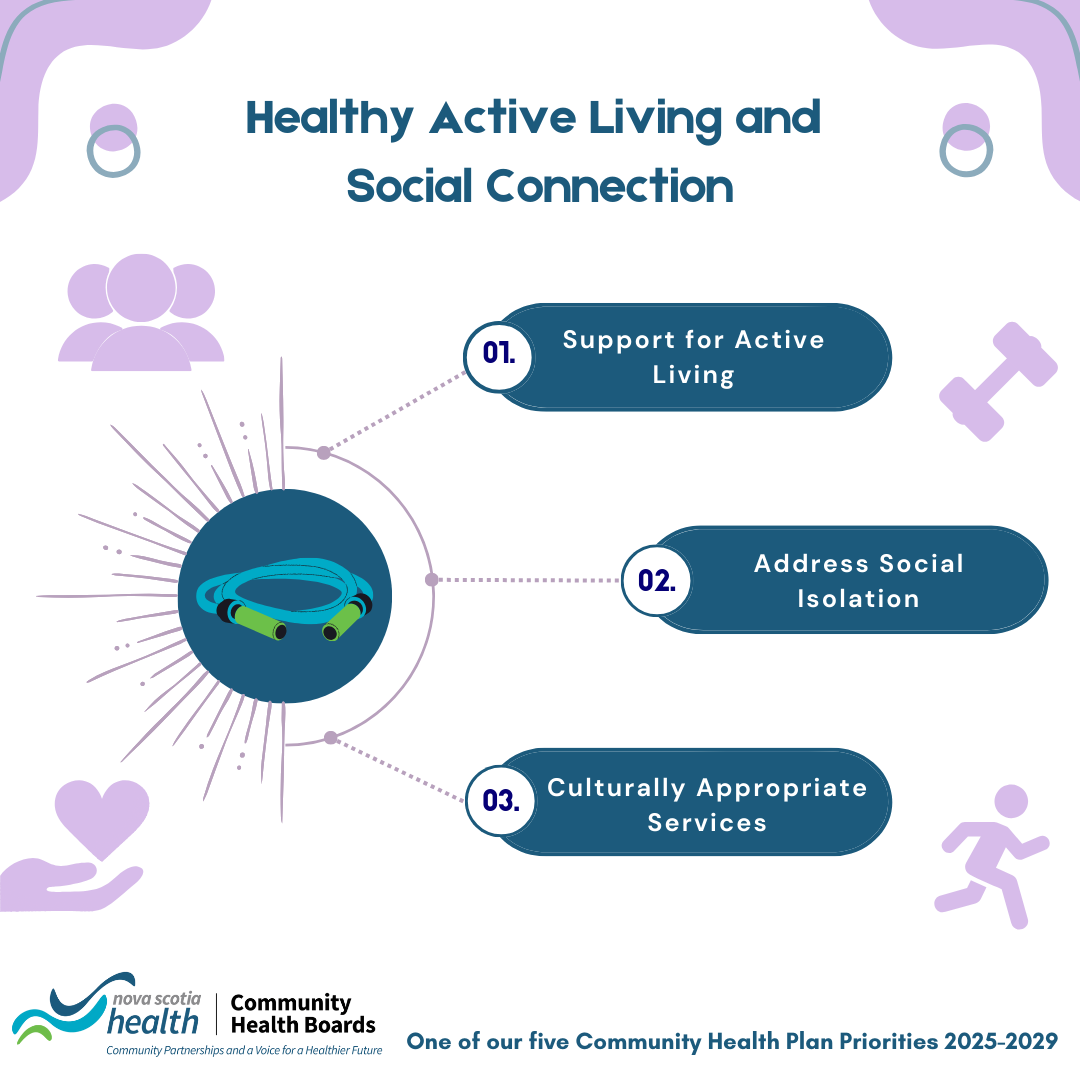
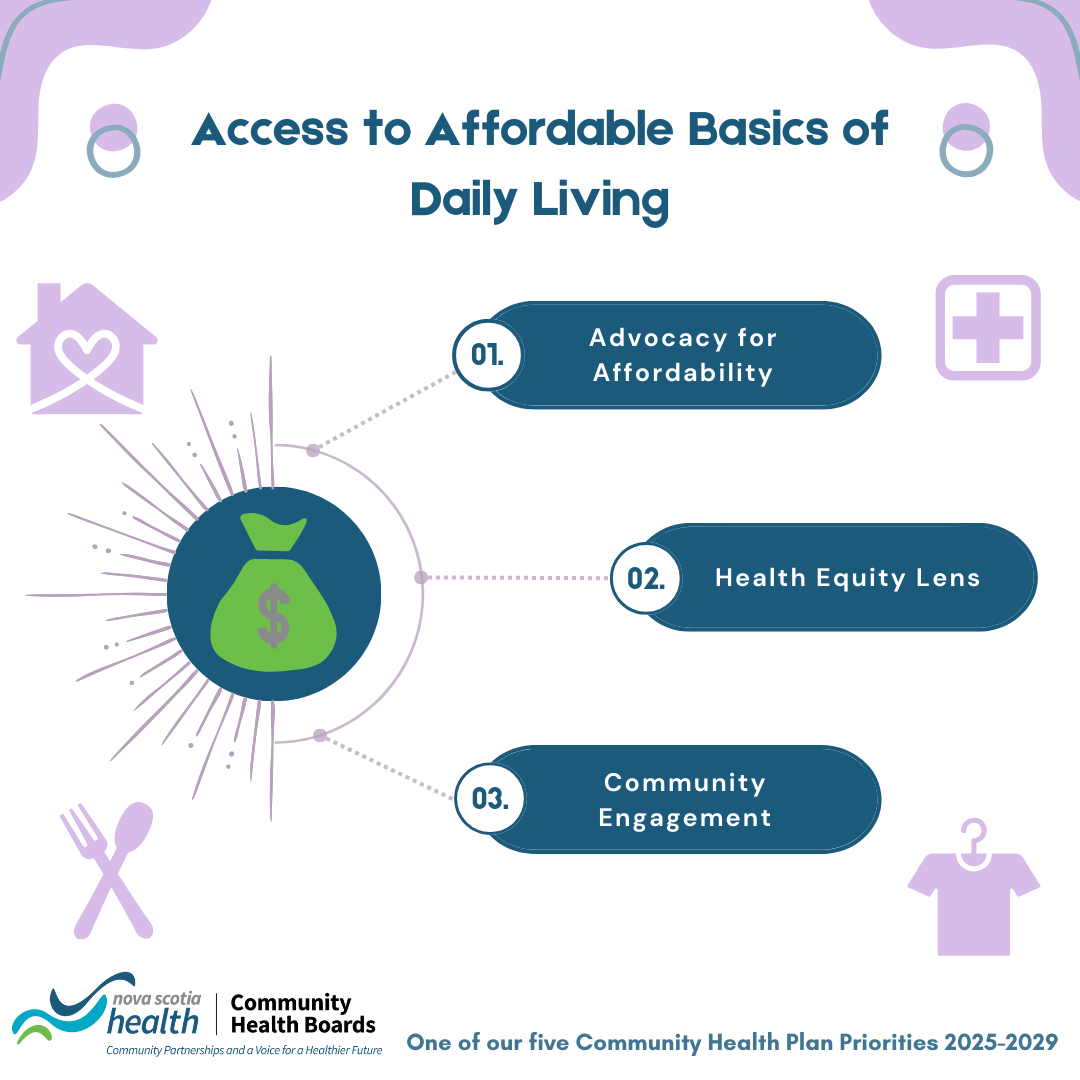
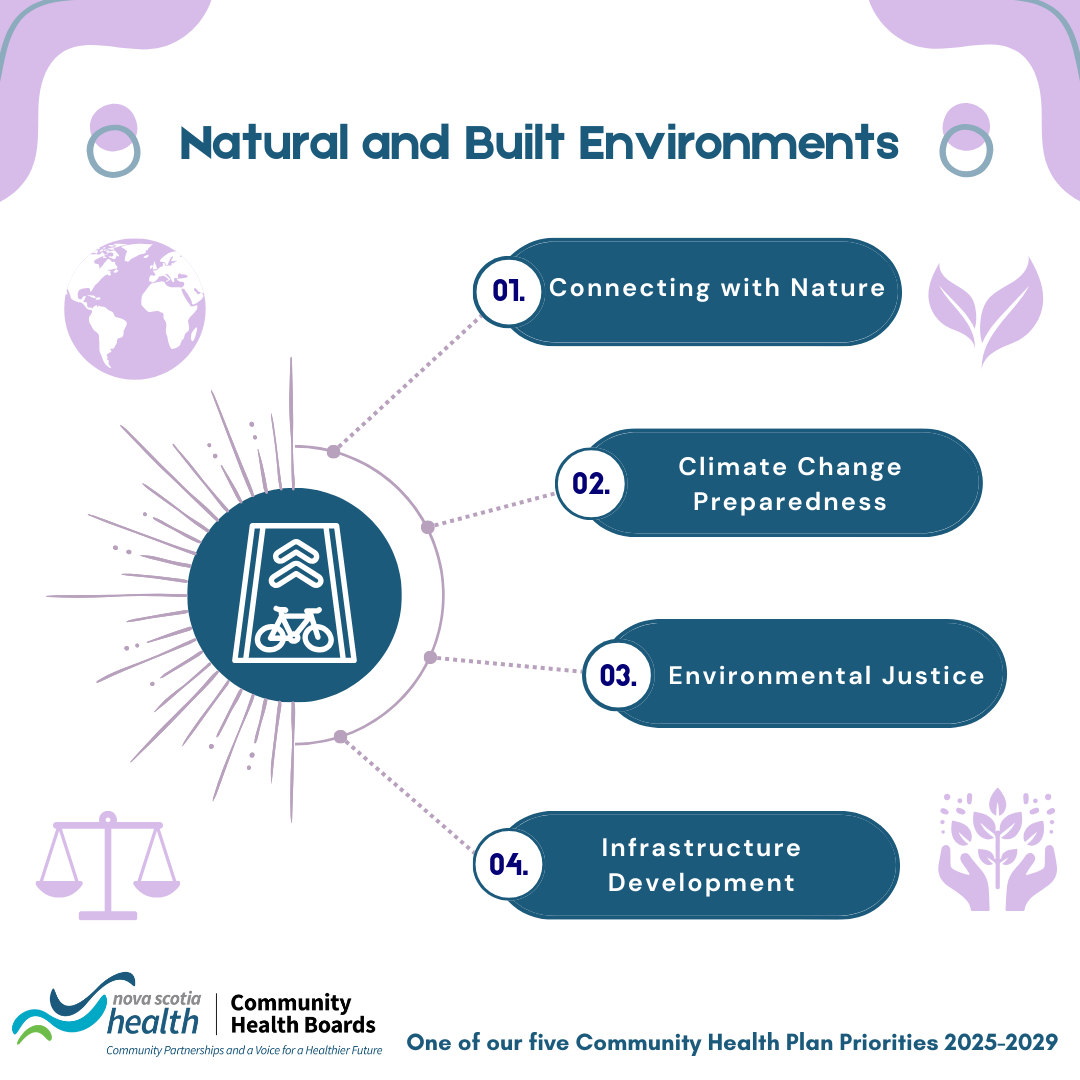
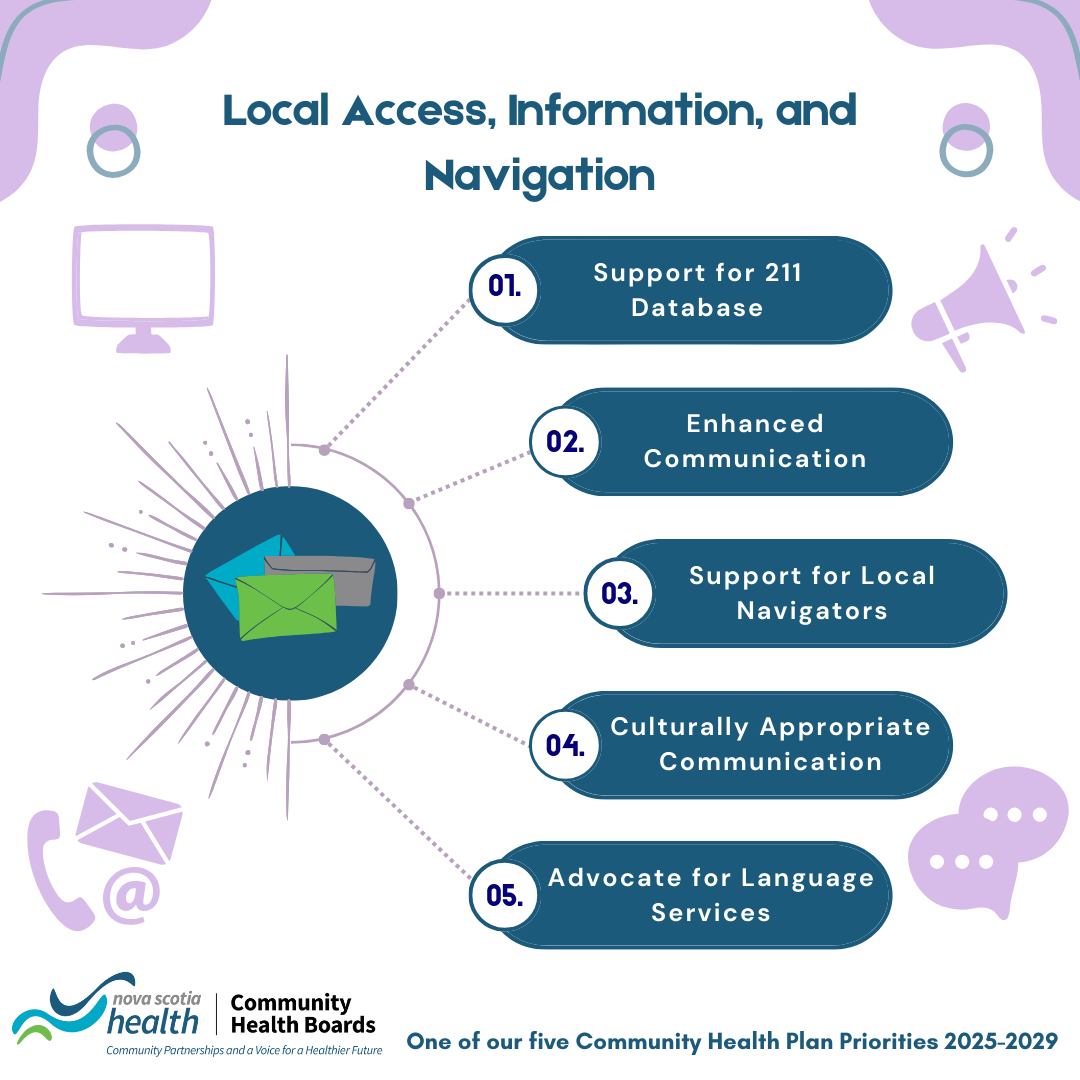
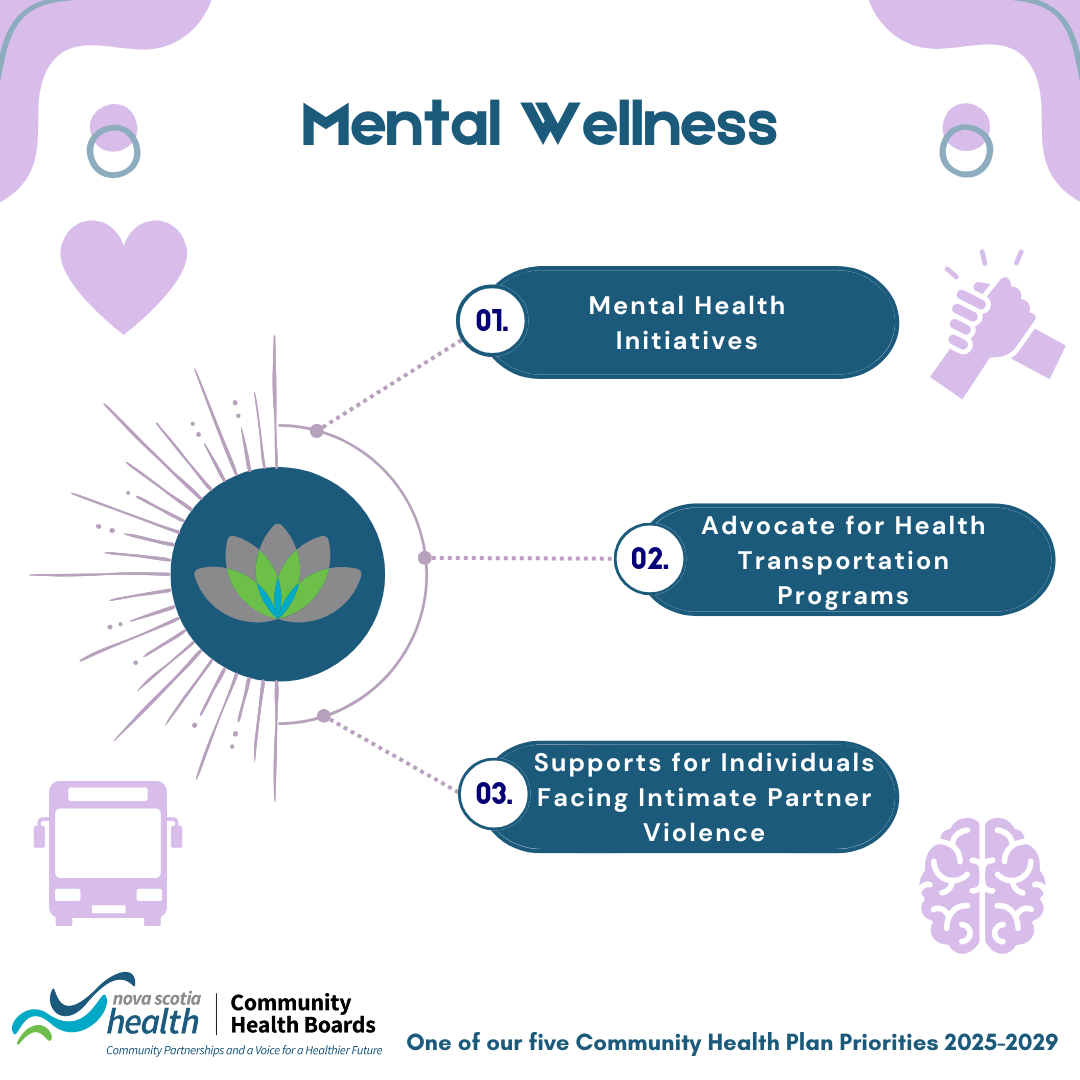
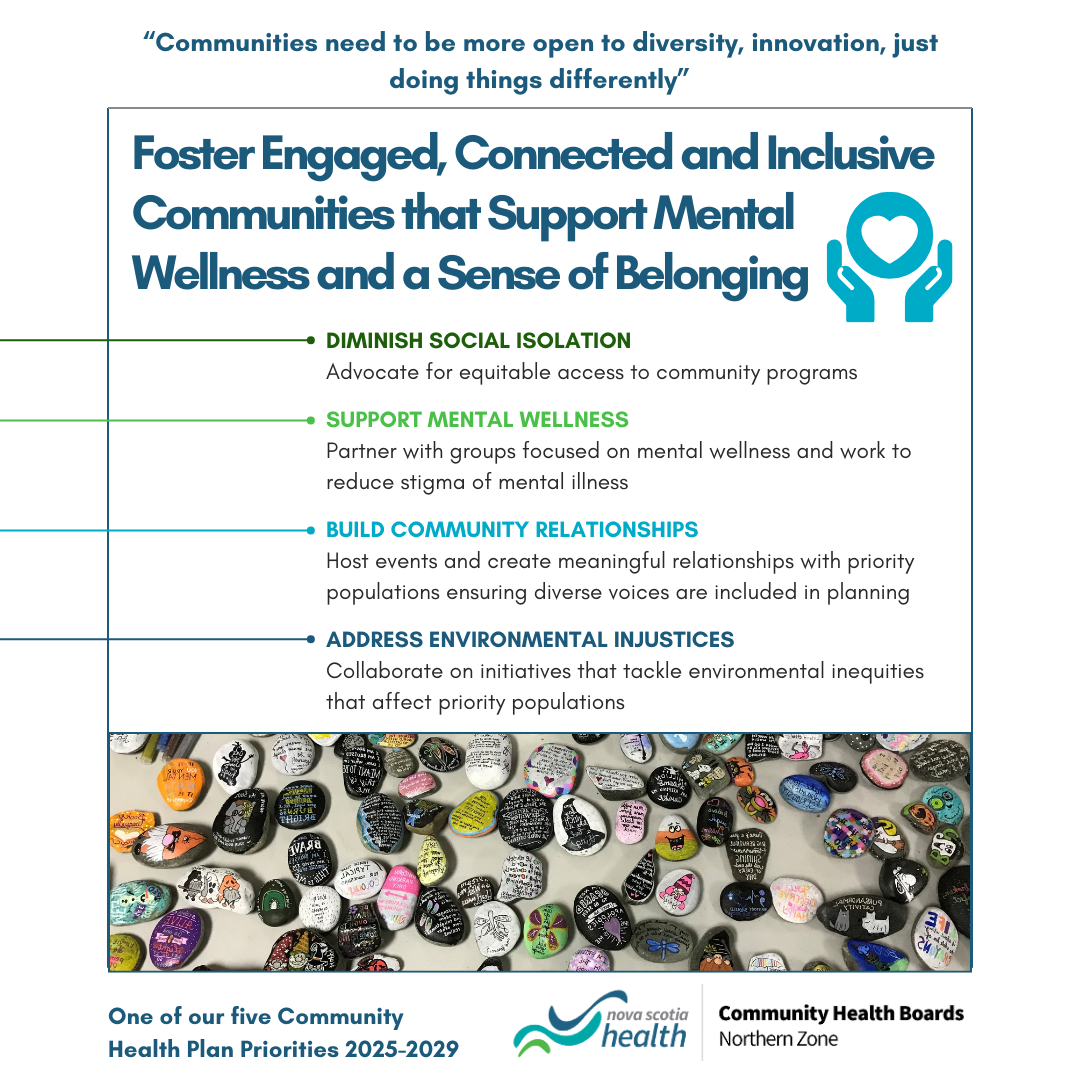
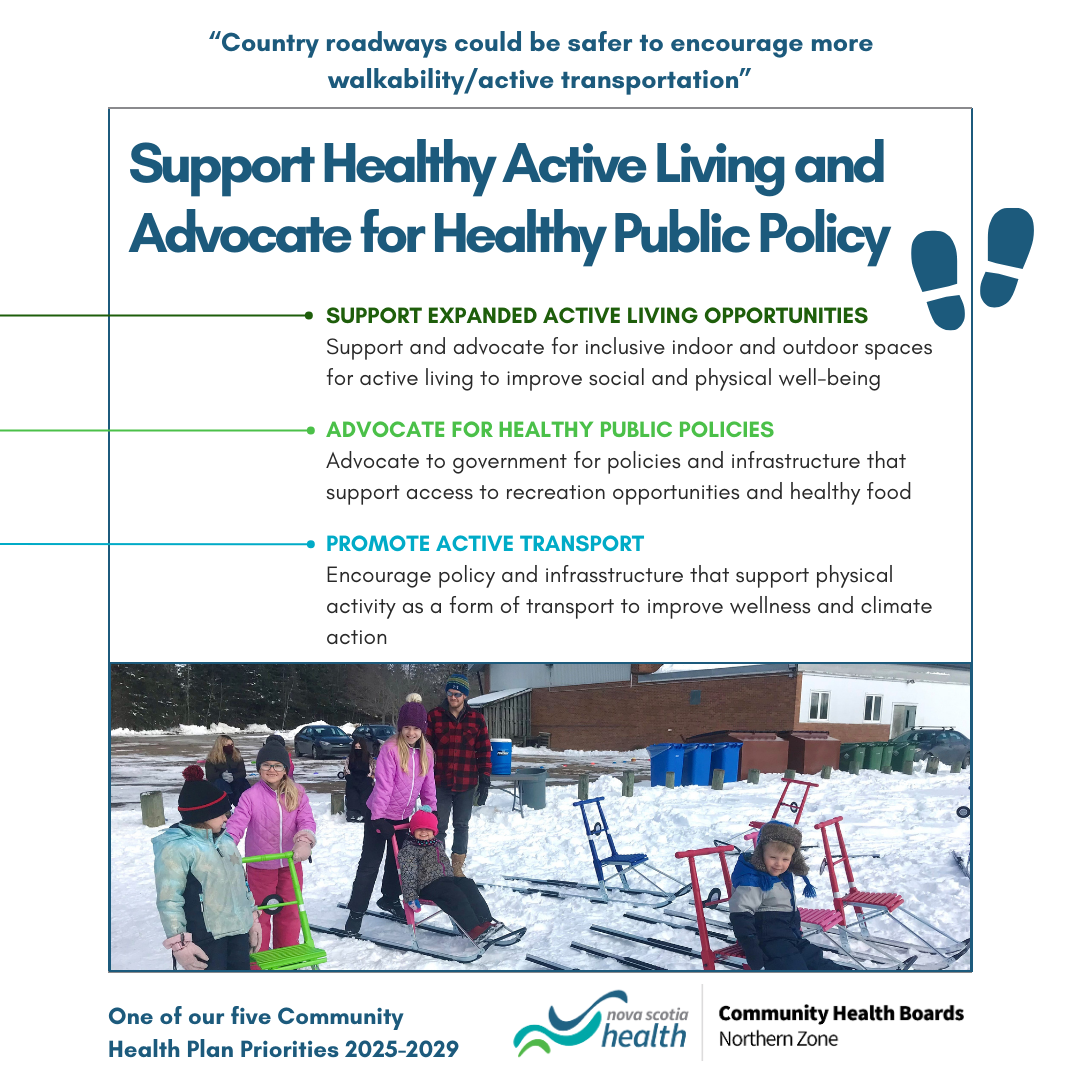
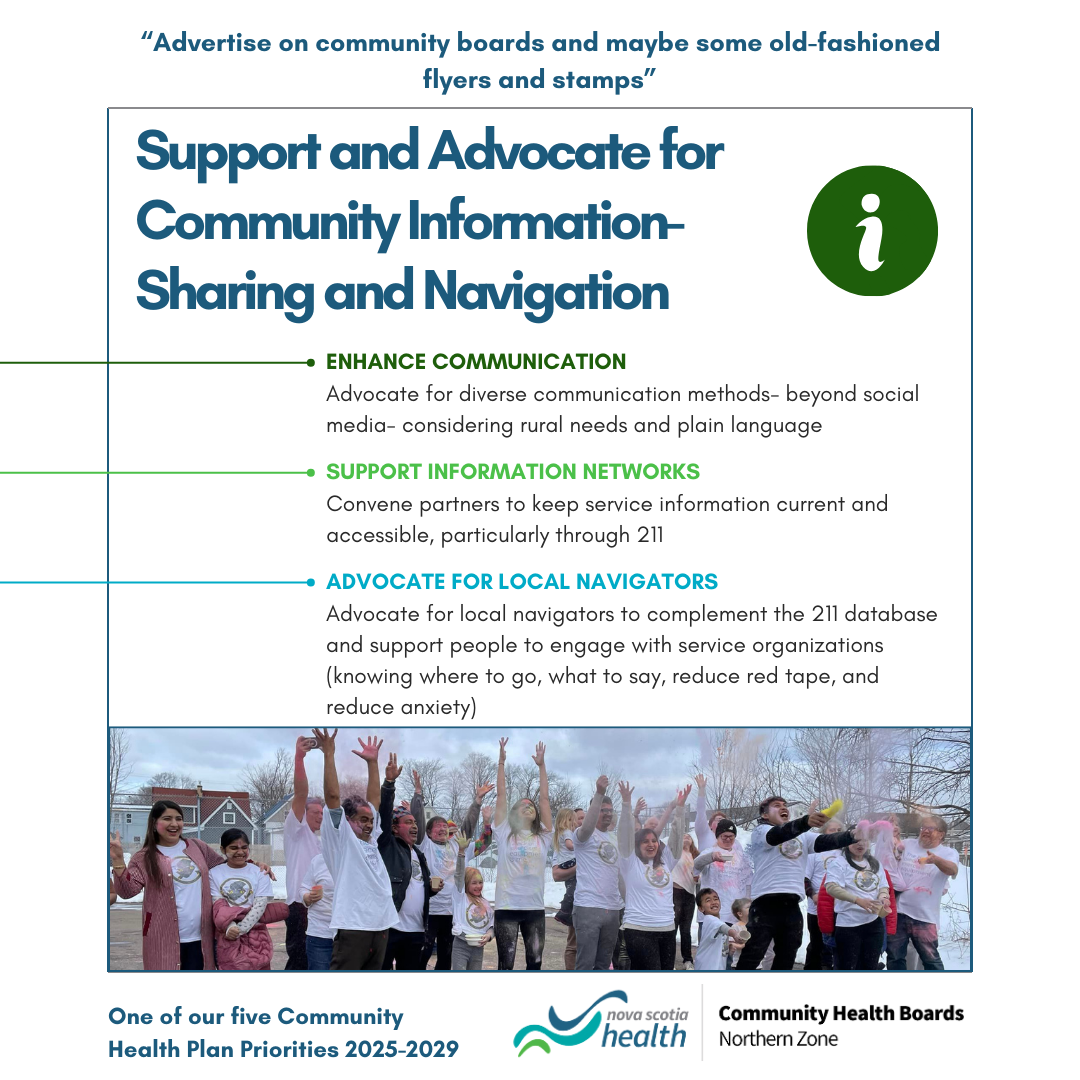
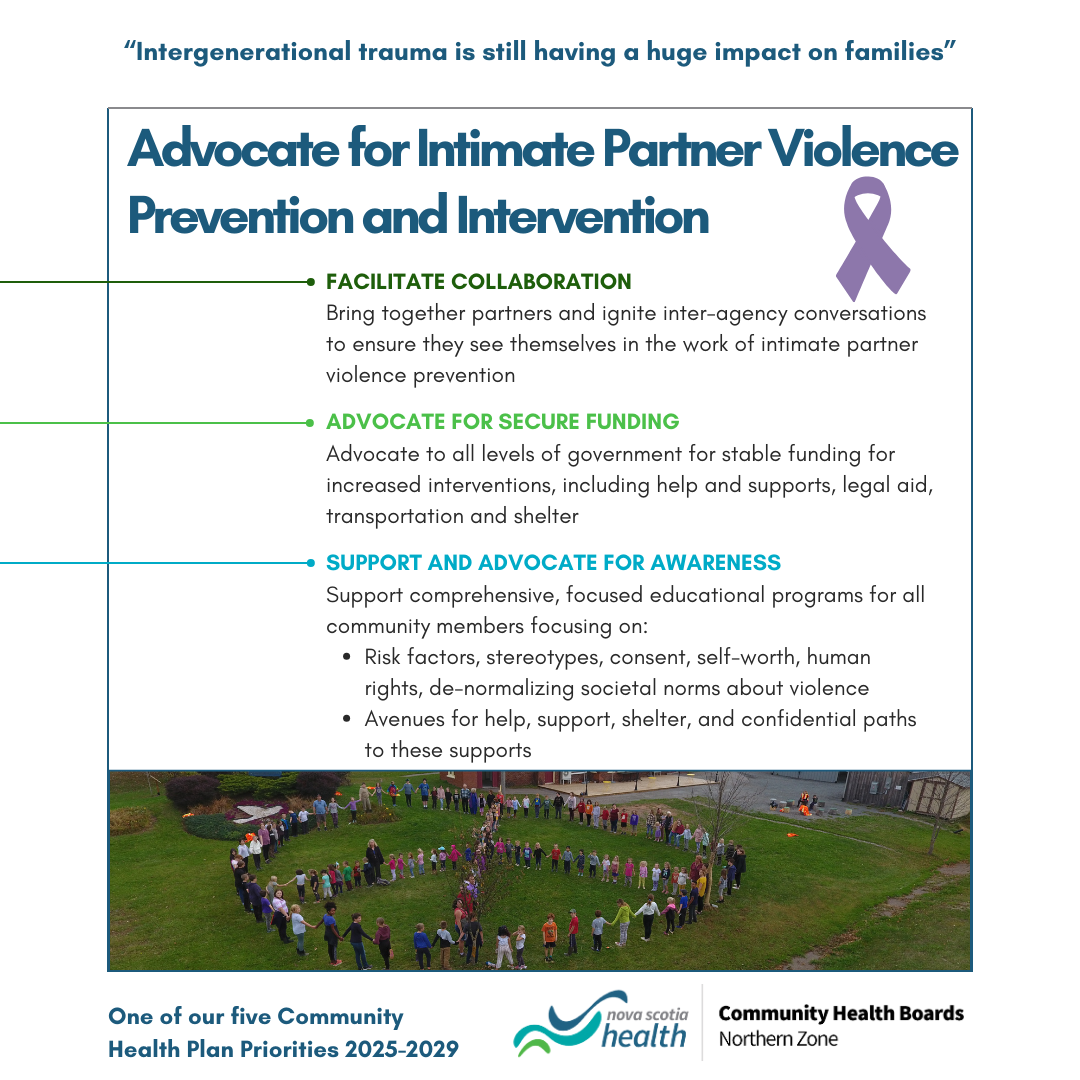
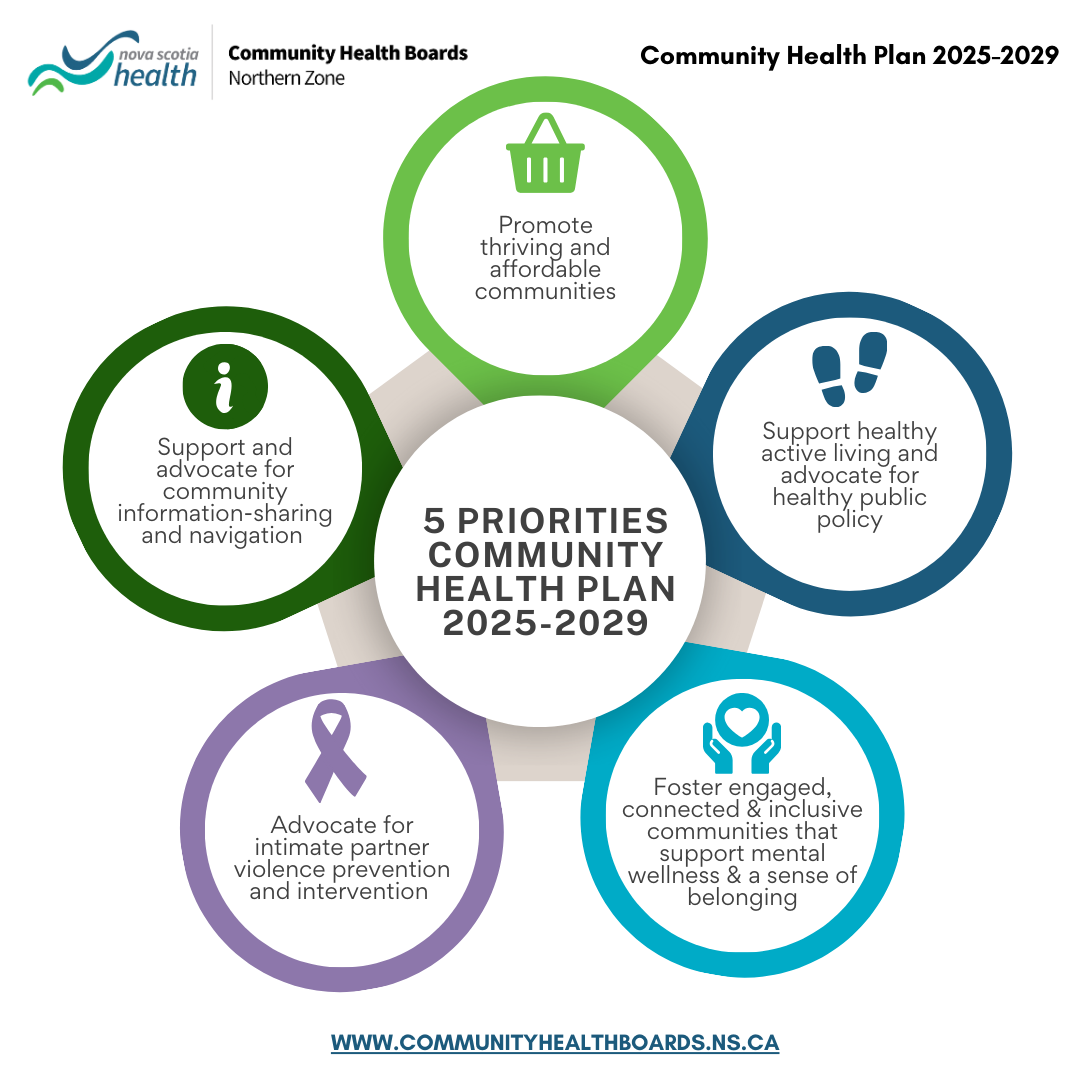
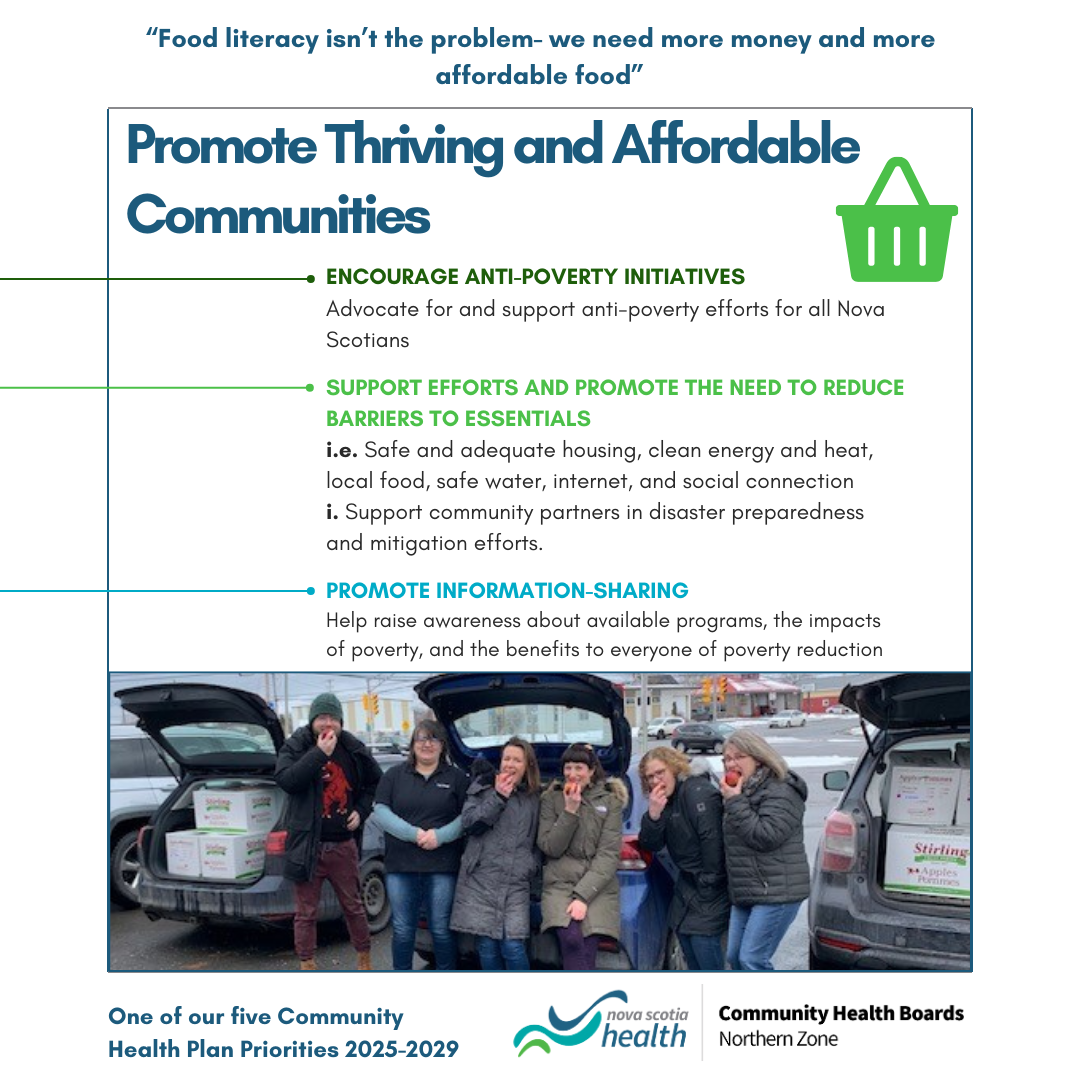
Social media graphics were created to share information about our Community Health Plan and priorities.
Annual Report
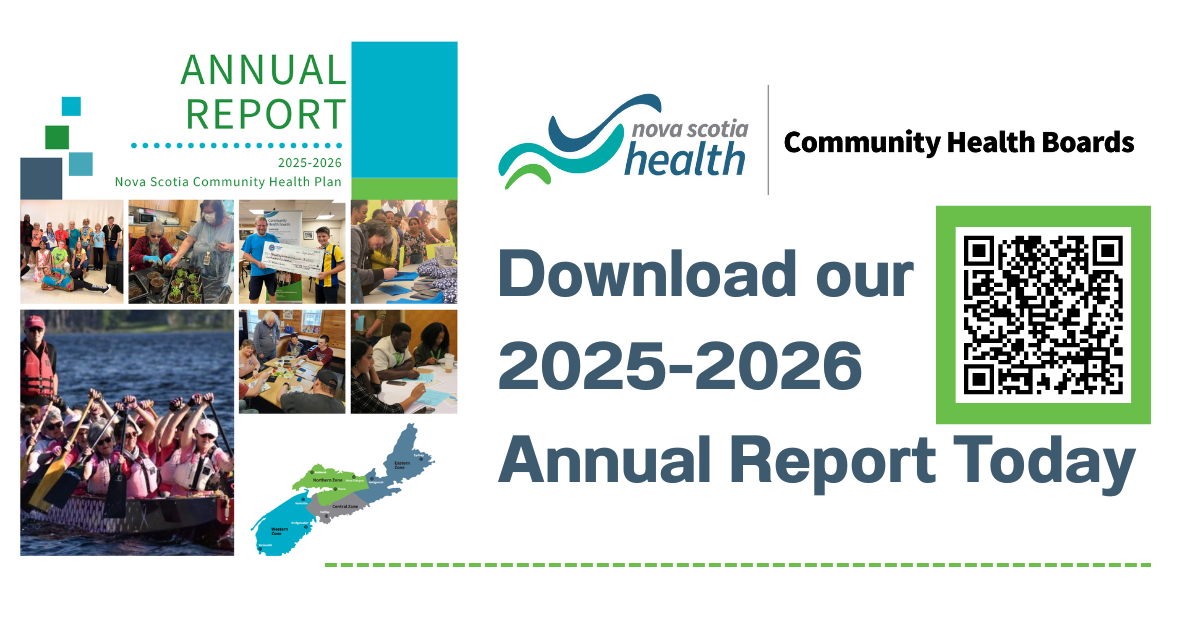
In the spring of 2026, we released our first provincial annual report that showcases work being done throughout the province by our Community Health Boards to demonstrate our commitment to action in the priority areas identified through our health planning engagement process. This report was shared with senior leadership and also shared with community using a social media post with QR code. An annual report will be produced every year until the creation of our next community health plan in 2030.
Bonus: Evaluation
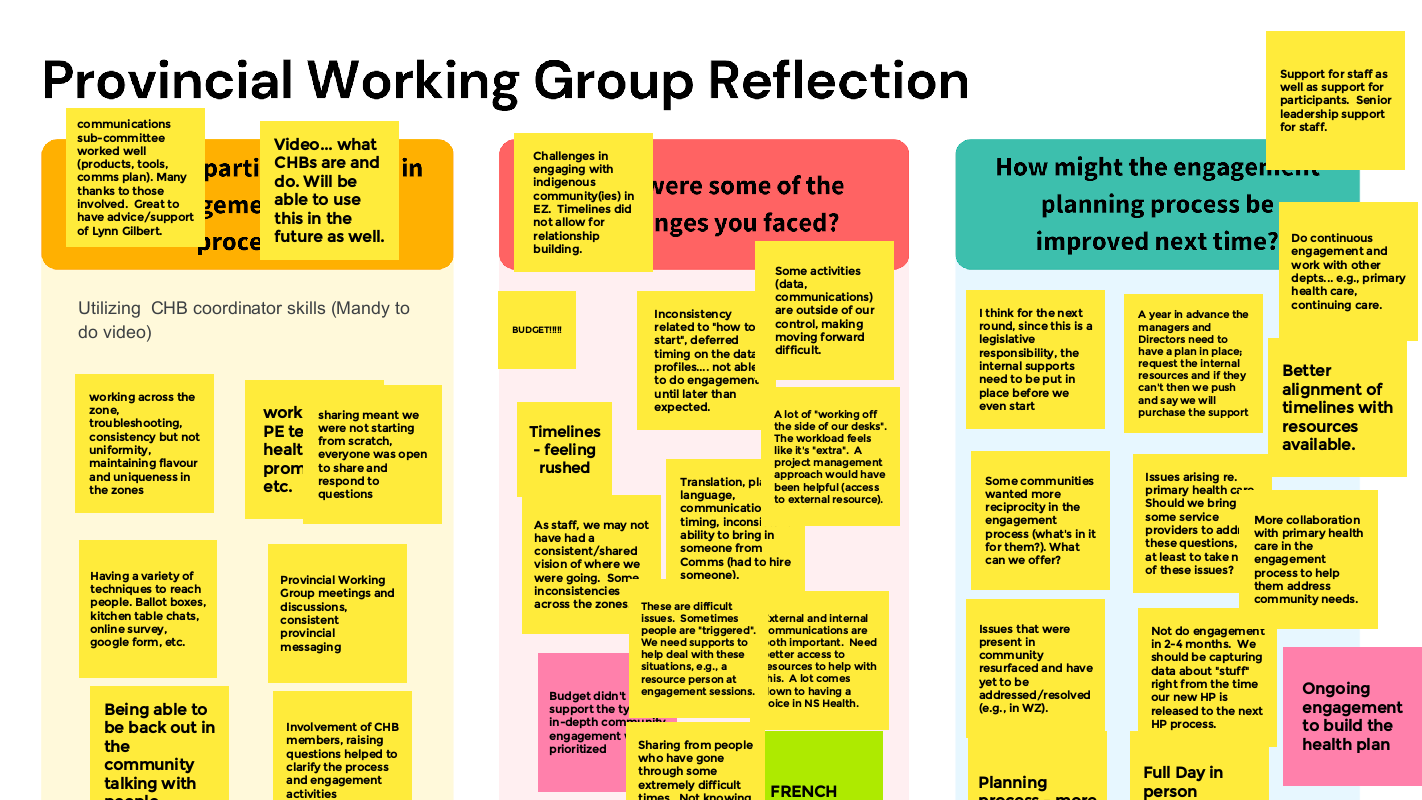
After all was said and done, our provincial engagement working group came together to evaluate our community engagement process throughout this project, identifying what went well and opportunities for improvement. We will continue to use this feedback to strengthen future engagement processes as we head toward our next Community Health Plan in 2030!